
The Shift: From Tools to Decision-Makers
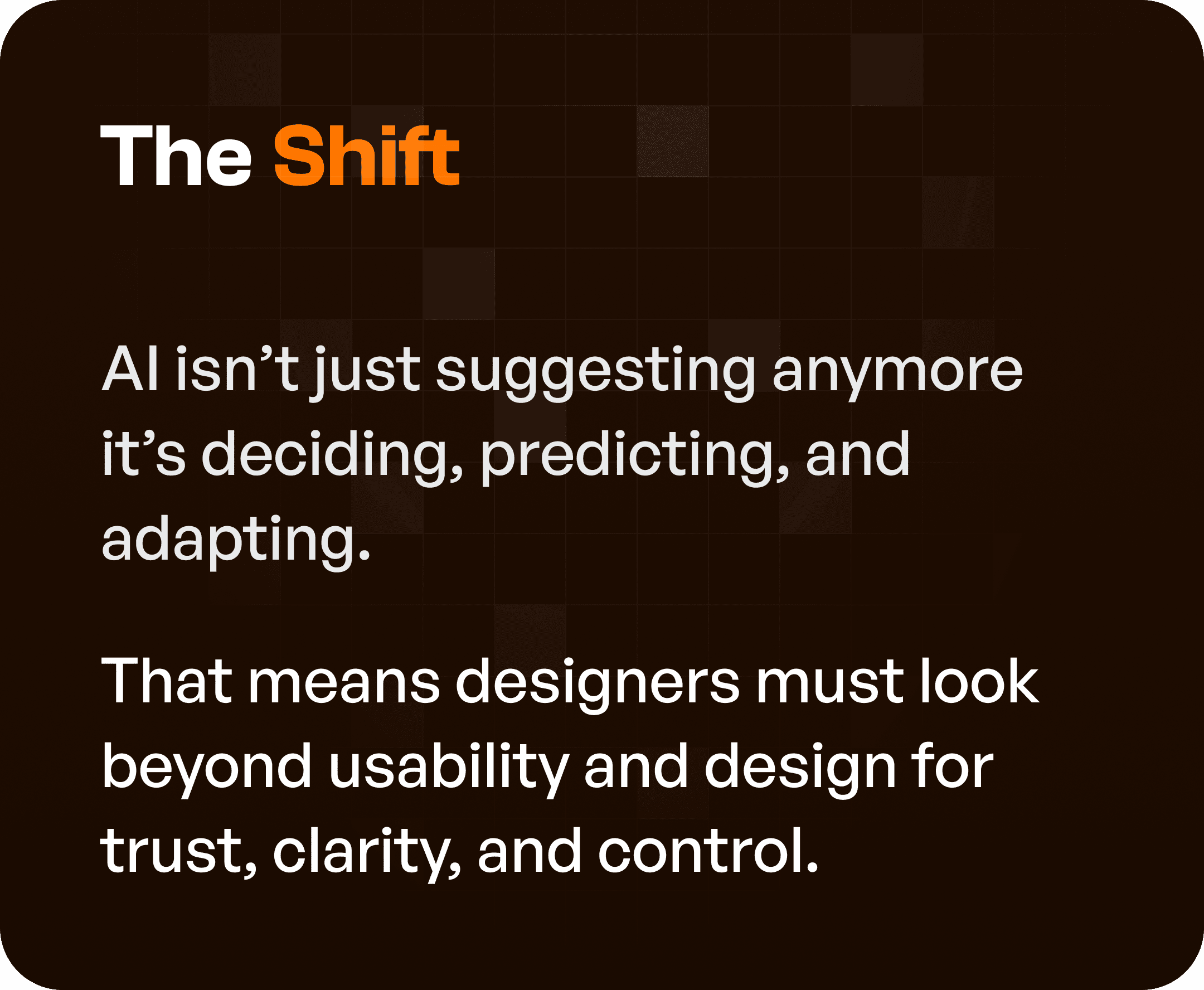
Traditional software has always followed a predictable pattern. Users provide input, and the system responds accordingly. The relationship is direct and controlled.
AI-driven systems, however, go a step further. They predict, decide, and adapt. Instead of simply responding, they actively participate in shaping outcomes. This fundamentally changes the user’s role in the system.
Users are no longer controlling every step of the process. Instead, they are collaborating with the system. This introduces a new dynamic—one where users must interpret, evaluate, and sometimes question the system’s decisions.
This shift requires a completely different approach to UX design. Designers can no longer focus only on task completion or efficiency. They must design for transparency, explainability, and user confidence.
Because users are no longer just interacting with the system—they are evaluating its intelligence and reliability.
The Core Challenge: Lack of Visibility
One of the biggest challenges in AI-powered products is invisibility.
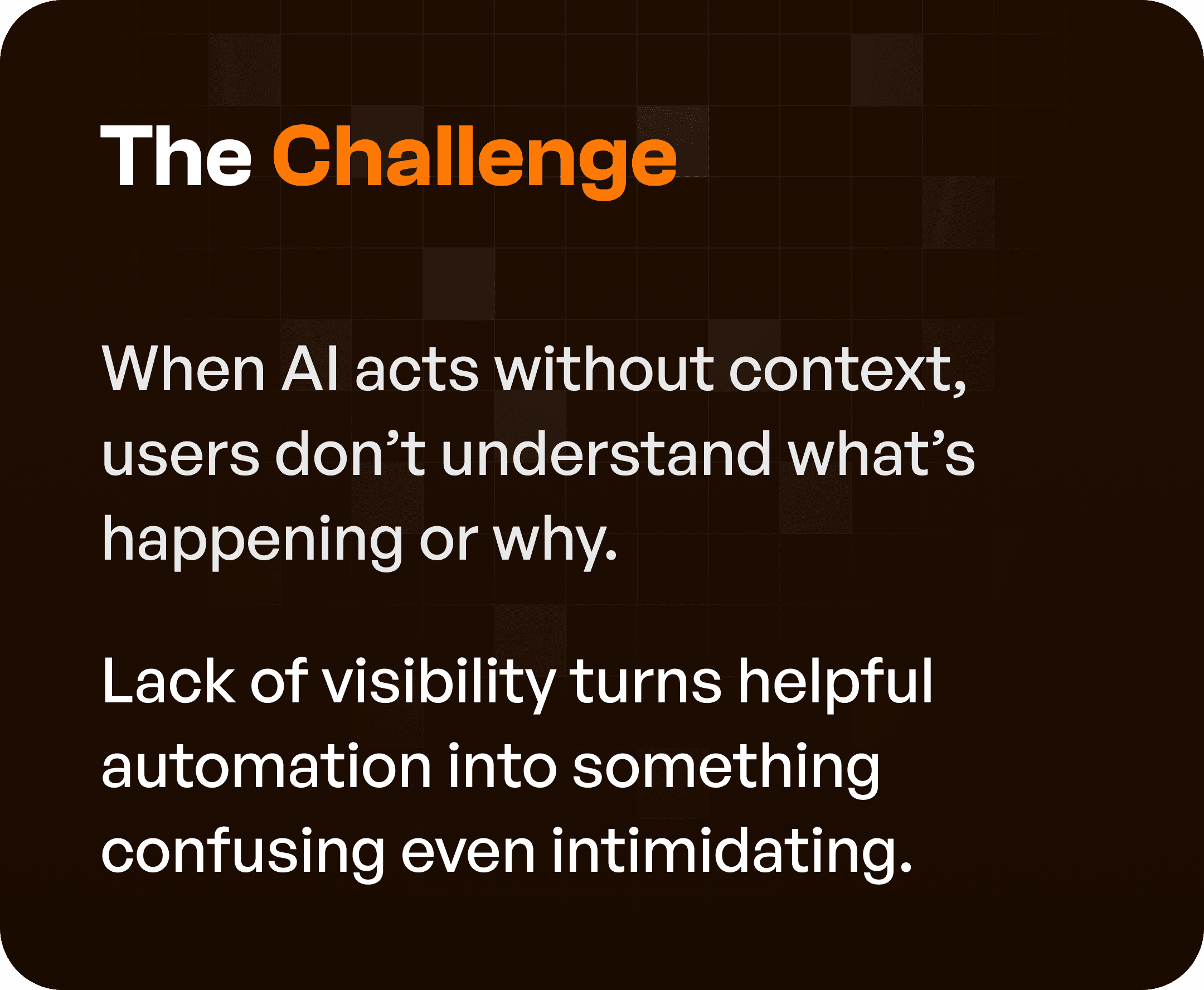
When AI makes decisions without showing how or why, users feel disconnected from the process. Even if the system is technically accurate, the absence of context creates doubt. Users are left wondering whether they can trust the output.
This creates a critical gap between system intelligence and user understanding. And in that gap, trust begins to break down.
Automation, which is meant to simplify workflows, starts to feel confusing or even intimidating. Users hesitate, second-guess outcomes, and in some cases, avoid using the system altogether.
The problem is not that AI is wrong. The problem is that users cannot see or understand how it works.
Designing for Transparency
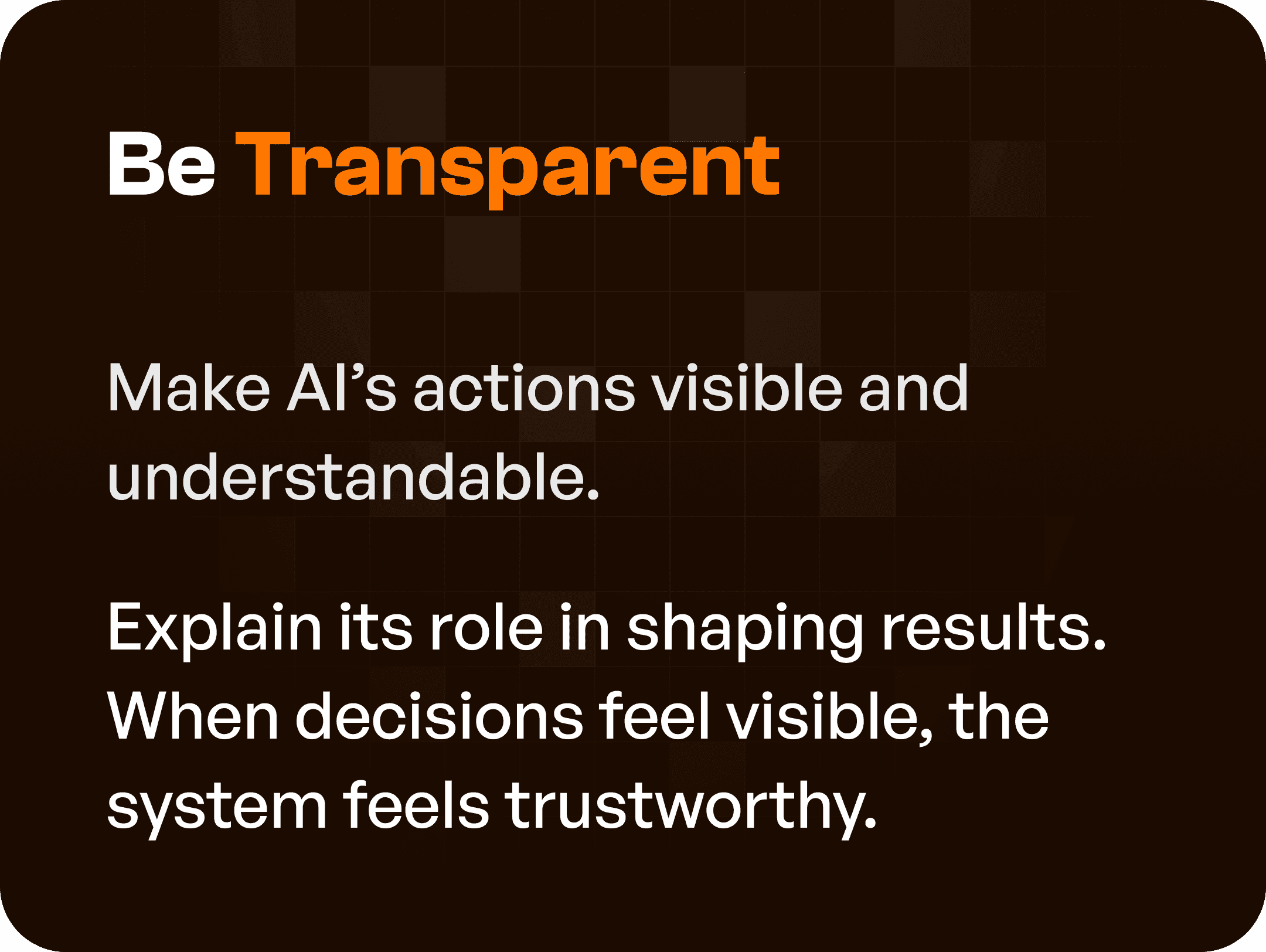
To bridge this gap, AI systems must make their actions visible.
Users should be able to clearly understand what the system is doing at any given moment, why it is taking a specific action, and how it arrived at a particular decision. This visibility transforms AI from a black box into something users can engage with confidently.
However, transparency does not mean exposing raw technical data or overwhelming users with complexity. It means presenting information in a way that is meaningful, relevant, and easy to understand.
When users can see the reasoning behind decisions, their confidence increases. The system becomes something they can trust rather than something they need to question.
Transparency turns mystery into clarity.
Explain Decisions in Human Terms
A common mistake in AI UX is overloading users with technical explanations.
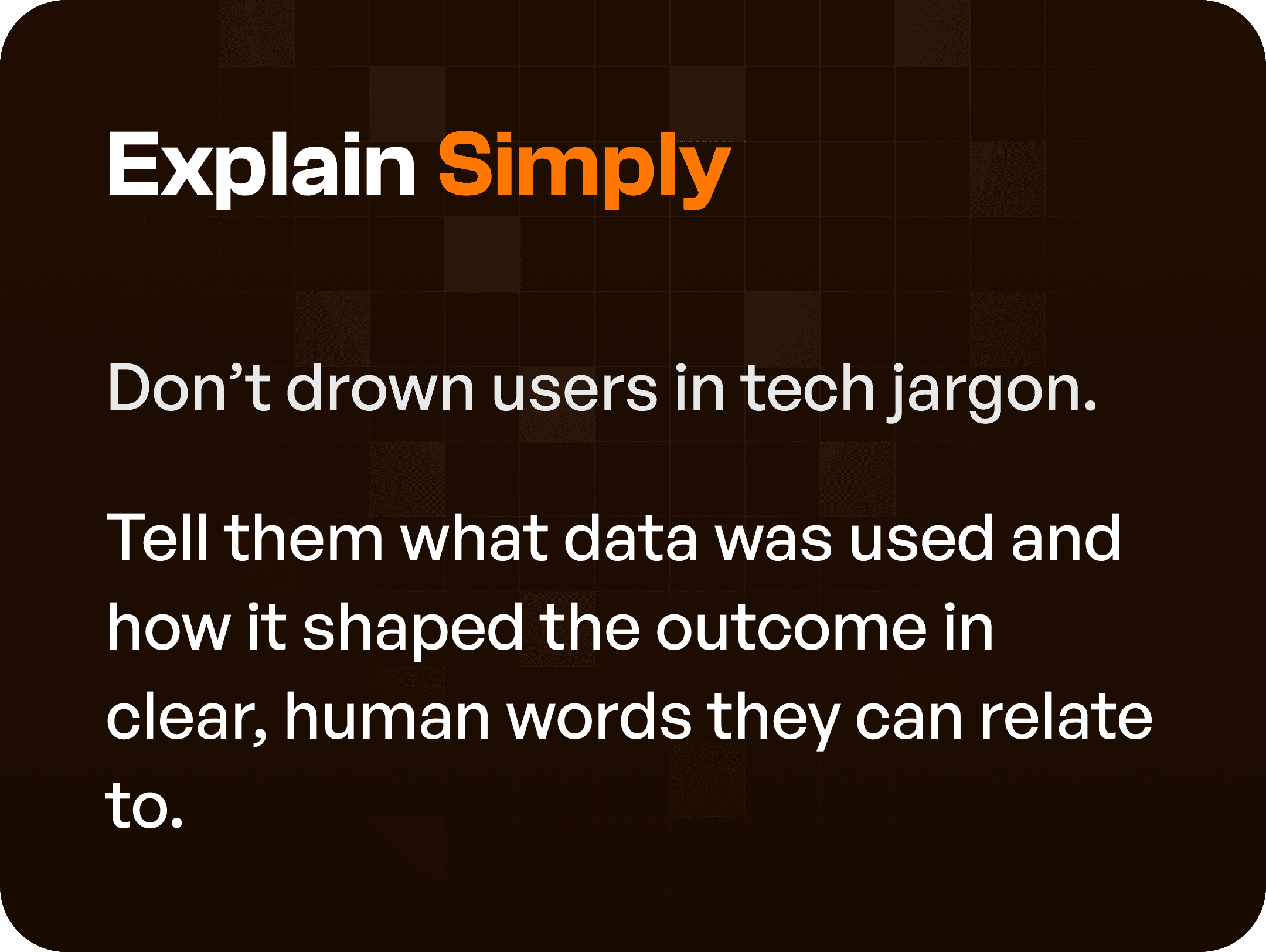
Users do not need to understand model architectures, algorithms, or data pipelines. What they need is clarity about what influenced the outcome and why it matters.
Effective AI UX focuses on translating complex decision-making into simple, human-readable explanations. It communicates what data was considered, which factors were most important, and how those factors contributed to the final result.
This kind of explanation reduces hesitation. It helps users quickly understand whether a decision aligns with their expectations and whether they should act on it.
Clarity leads to confidence, and confidence drives adoption.
Keeping Humans in Control
One of the most important principles in AI UX is maintaining user control.
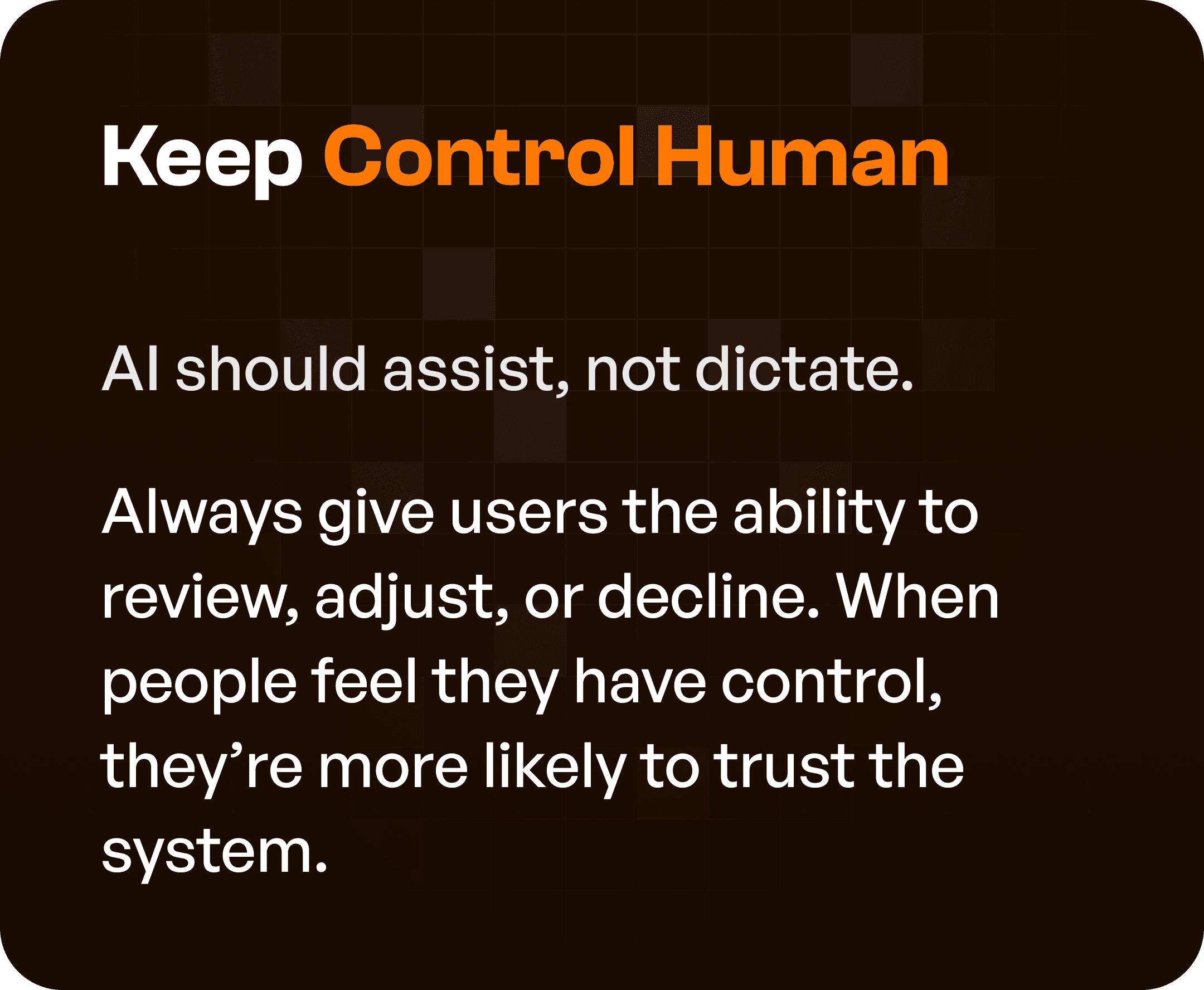
AI should assist users, not replace their decision-making authority. No matter how accurate the system is, users must feel that they have the final say.
This means designing systems where users can review decisions, adjust outcomes, and override suggestions when needed. Control mechanisms should be clear, accessible, and easy to use.
When users feel in control, they are more willing to trust the system. They see it as a support tool rather than a risk.
Without control, even highly accurate AI systems can feel unsafe. Users may hesitate to rely on them, especially in high-stakes environments.
Creating a Feedback Loop
AI systems are not static. They evolve over time, improving based on the data and interactions they receive.
For this improvement to happen effectively, users need to be part of the loop.
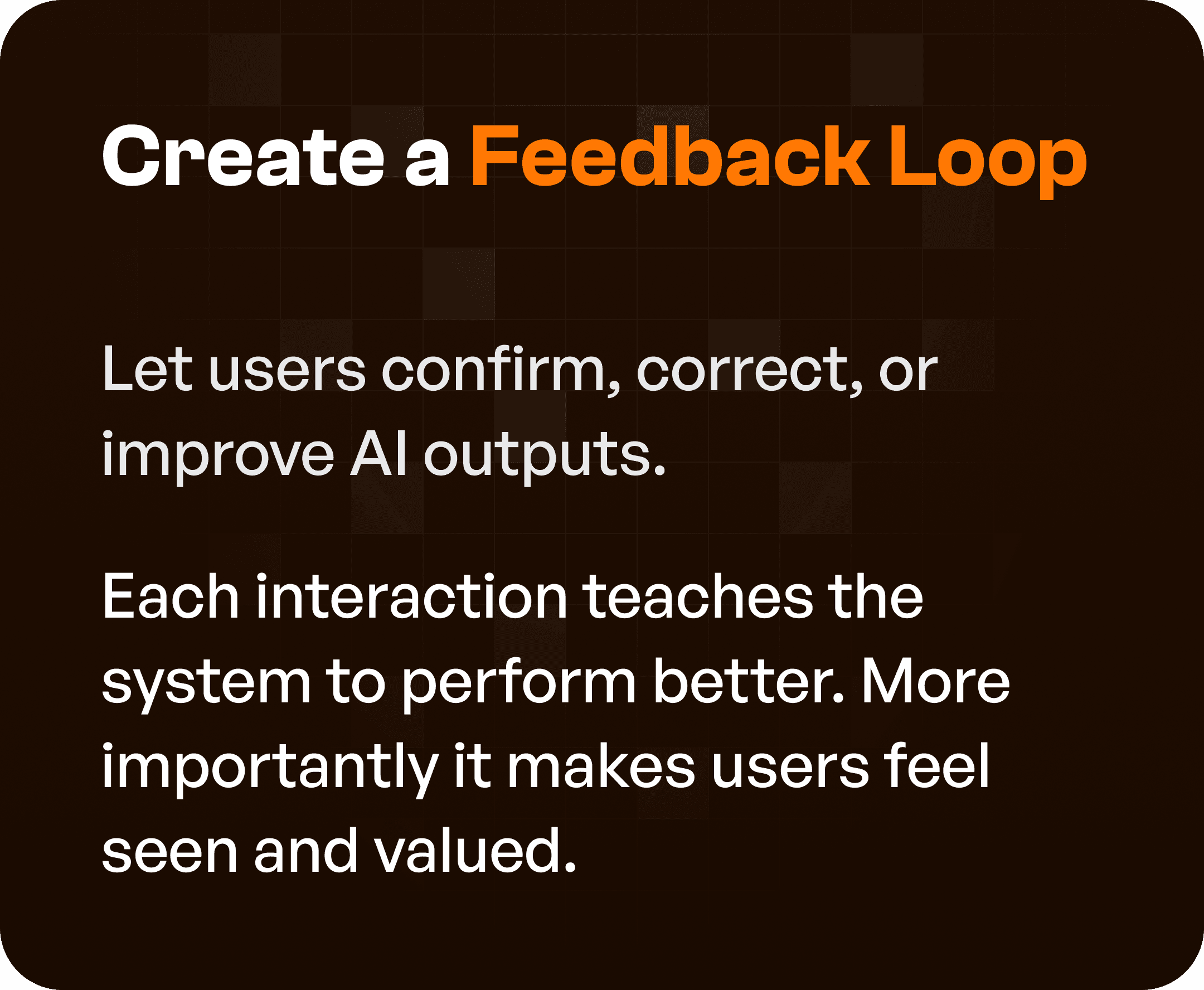
A well-designed AI experience allows users to confirm outputs, correct errors, and refine results. These interactions become valuable feedback signals that help the system learn and improve.
More importantly, this creates a sense of involvement. Users feel like they are contributing to the system rather than passively consuming its outputs.
This transforms the relationship between user and system from passive usage to active collaboration.
The Outcome: From Automation to Partnership
When AI-driven experiences are designed correctly, the relationship between user and system changes fundamentally.
Users no longer feel like decisions are being made for them. Instead, it feels like the system is working alongside them, supporting their goals and enhancing their capabilities.
This shift leads to higher trust, better decision-making, increased adoption, and stronger engagement.
The system is no longer just a tool. It becomes a partner in the workflow—one that users rely on, not just use.
Why This Matters for SaaS and Enterprise AI Products
In enterprise environments, decisions often carry high impact.
Whether it’s underwriting, healthcare diagnostics, or operational workflows, users need to understand and trust the system before acting on its outputs.
Poorly designed AI UX leads to:
Hesitation in decision-making
Rejection of automation
Increased manual overrides
Reduced system adoption
Well-designed AI UX does the opposite.
It accelerates workflows while maintaining user confidence.
How Upslide Design Studio Designs AI Experiences
At Upslide Design Studio, AI UX is approached as a system of trust rather than just an interaction layer.
The focus is on making AI decisions visible and understandable, simplifying complex outputs into clear insights, and ensuring that users always retain control over outcomes. Feedback mechanisms are designed to continuously improve both the system and the user experience.
This approach ensures that AI-driven products are not only powerful, but also usable, trustworthy, and scalable.
Because without trust, even the most advanced AI fails to deliver value.
Final Thought
AI is changing how software behaves.
But the success of AI products will not depend on how intelligent they are.
It will depend on how understandable and controllable they feel to users.
Because when users trust the system, they use it.
And when they use it confidently, the product succeeds.