

Pharmaceutical warehouse operations are inherently complex.
They involve:
material management
inventory tracking
batch processing
quality checks
dispatch workflows
But in many systems, inefficiency doesn’t come from operations.
It comes from poor UX design and unstructured workflows.
At Upslide Design Studio, we redesigned a pharmaceutical Warehouse Management System (WMPS) to improve clarity, reduce manual effort, and streamline operations.
What is a Pharma Warehouse Management System (WMPS)?
A Warehouse Management System (WMS) in pharma is used to manage:
Material storage
Inventory movement
Batch lifecycle
Compliance processes
Unlike standard WMS platforms, pharma systems must also handle:
Regulatory workflows
Traceability
Quality assurance steps
This makes UX design critical.
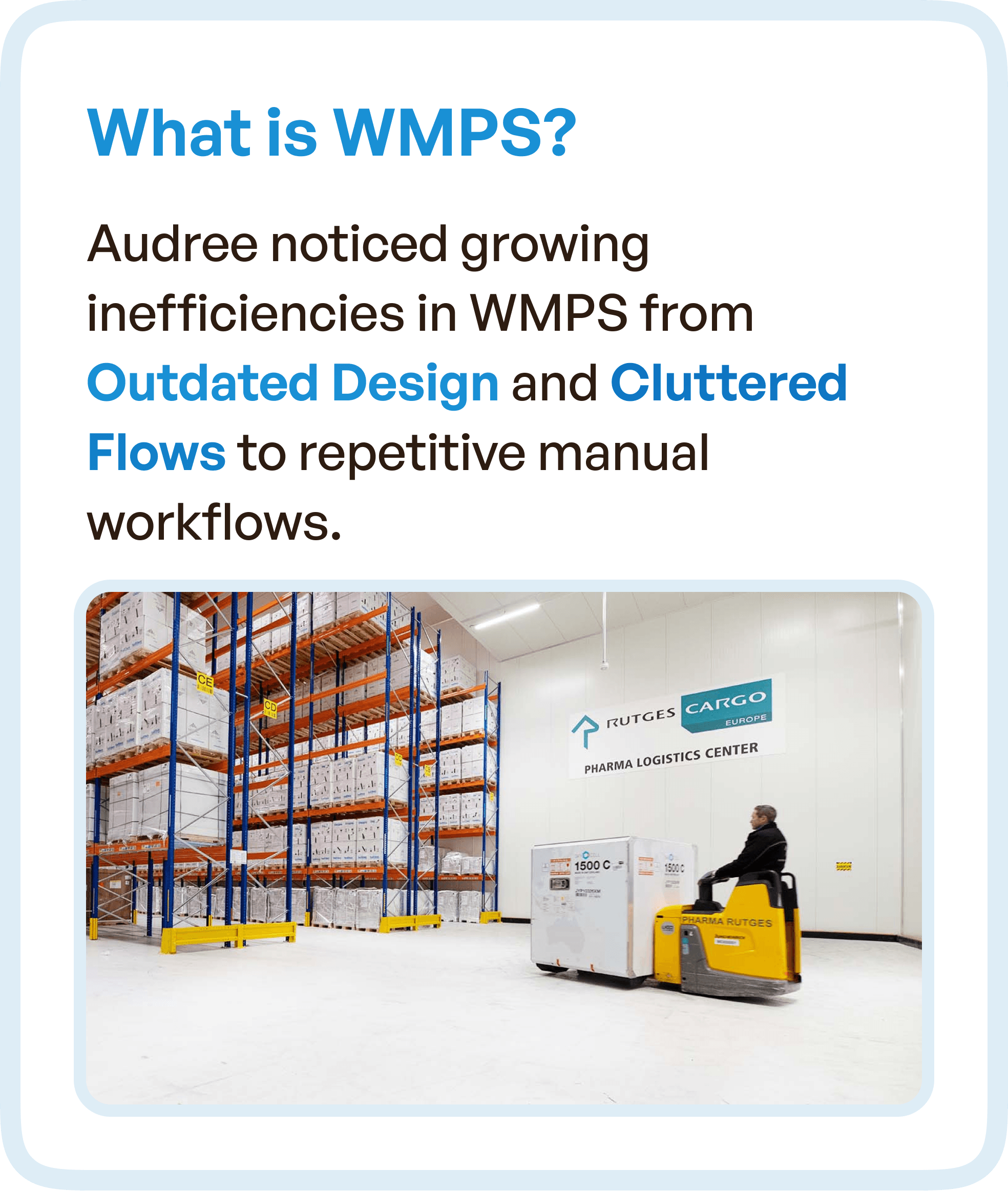
The Core Problem: Outdated Design and Fragmented Workflows
Audree’s WMPS faced increasing inefficiencies due to:
Outdated UI design
Cluttered and disconnected workflows
Heavy reliance on manual coordination
This resulted in:
Repetitive tasks
Process delays
Operational confusion
The system was functional, but not efficient.
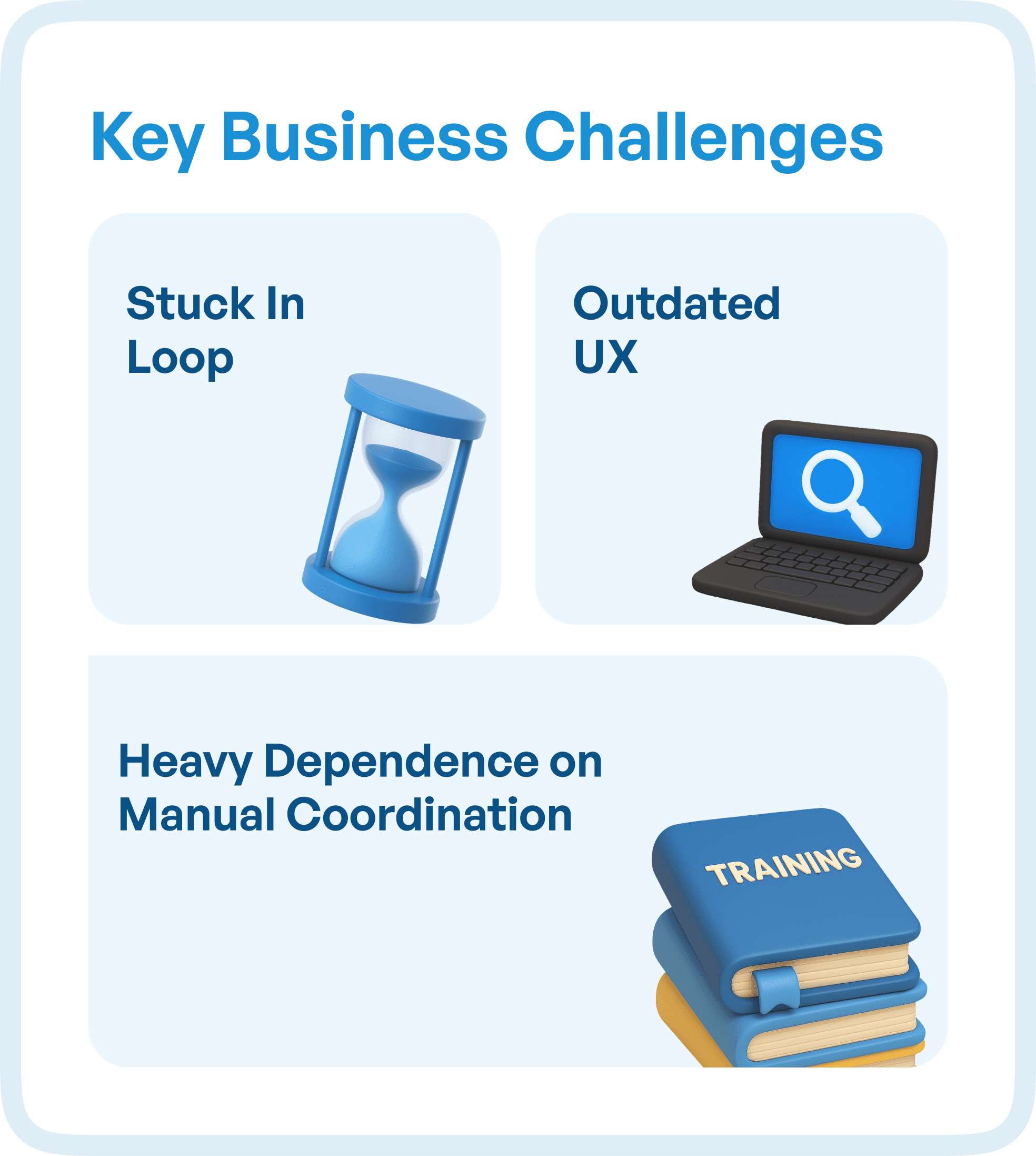
Key Business Challenges
1. Stuck in Process Loops
Users repeated steps due to unclear workflows.
2. Outdated UX
Interfaces did not reflect modern usability standards.
3. Heavy Manual Dependency
Teams relied on communication instead of system guidance.
These issues reduced productivity and increased error risk.
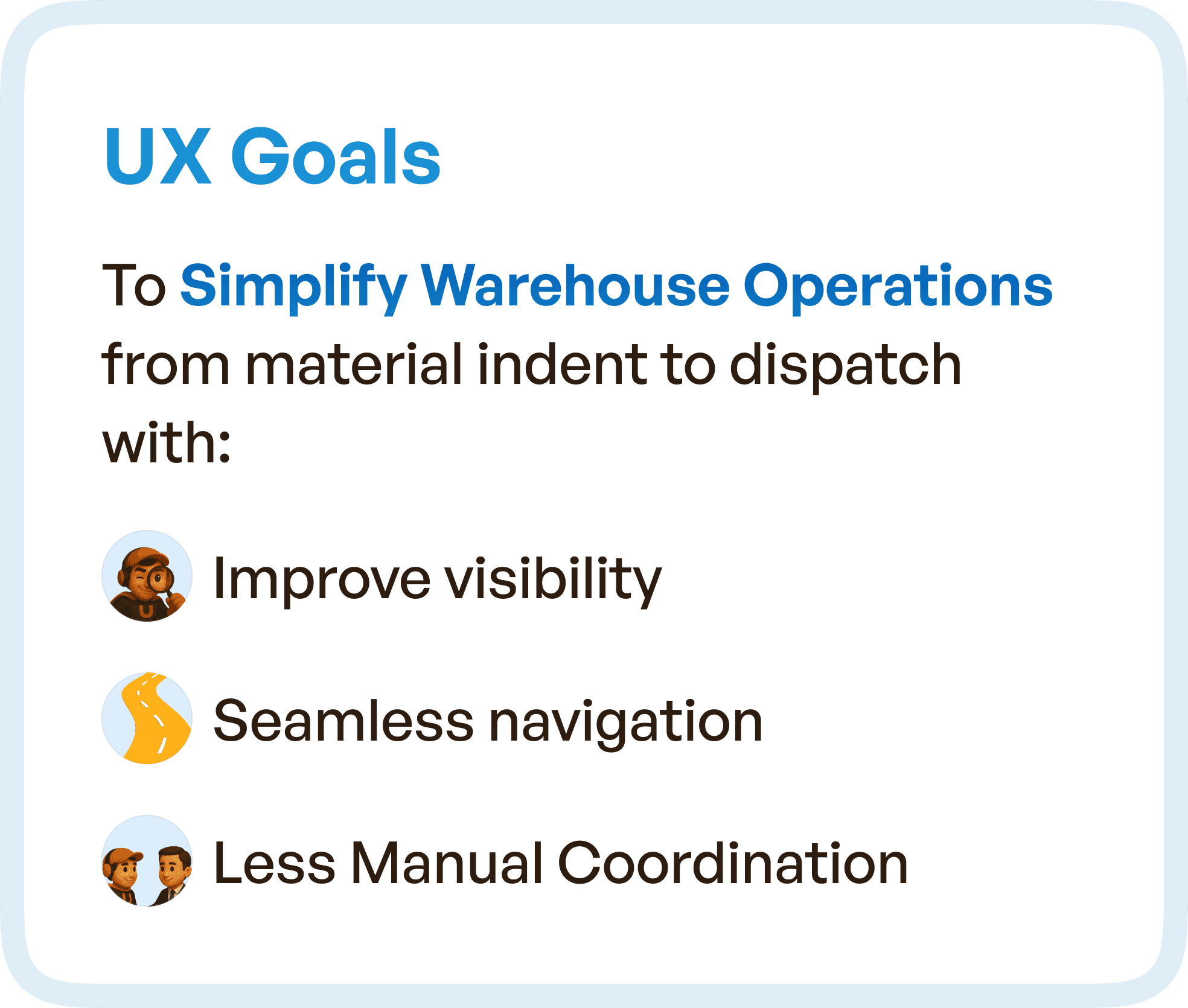
UX Goal: Simplify End-to-End Warehouse Operations
The objective was to redesign the system to:
Simplify warehouse workflows
Less manual coordination
Improve visibility across processes
From material indent to dispatch, every step needed clarity.
UX Approach: Restructuring Warehouse Flows
Instead of focusing only on UI improvements, we restructured the entire workflow logic.
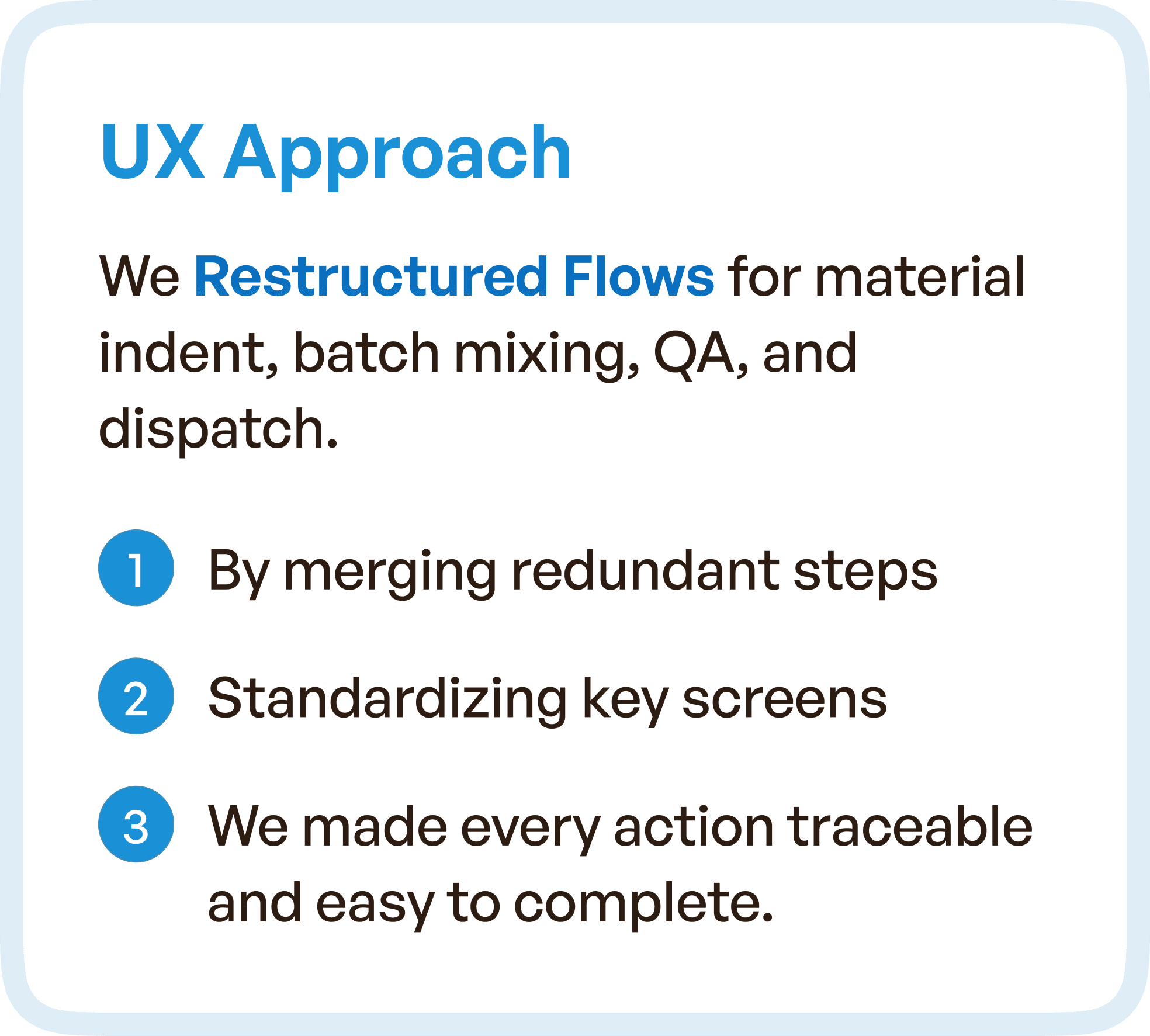
1. Merging Redundant Steps
We identified and eliminated unnecessary actions.
Result:
Fewer steps
Faster task completion
Reduced user effort
2. Standardizing Key Screens
Different modules had inconsistent layouts.
We introduced:
Consistent design patterns
Predictable navigation
Uniform interaction behavior
This improved usability across the system.
3. Making Actions Traceable
Users struggled to track progress across workflows.
We redesigned flows to ensure:
Clear action states
Visibility of progress
Easy completion of tasks
This improved accountability and control.
Design Highlights: Creating Clarity Through Interface
We redesigned the interface with a focus on readability and instant comprehension.
Key improvements:
Clean and structured layouts
Color-coded status indicators
Clear data hierarchy
This helped users:
Interpret information quickly
Take action without confusion

Simplifying Warehouse Operations
The redesigned system enabled:
Clear visibility of inventory and processes
Seamless navigation between workflows
Reduced reliance on manual coordination
This transformed complex operations into manageable workflows.
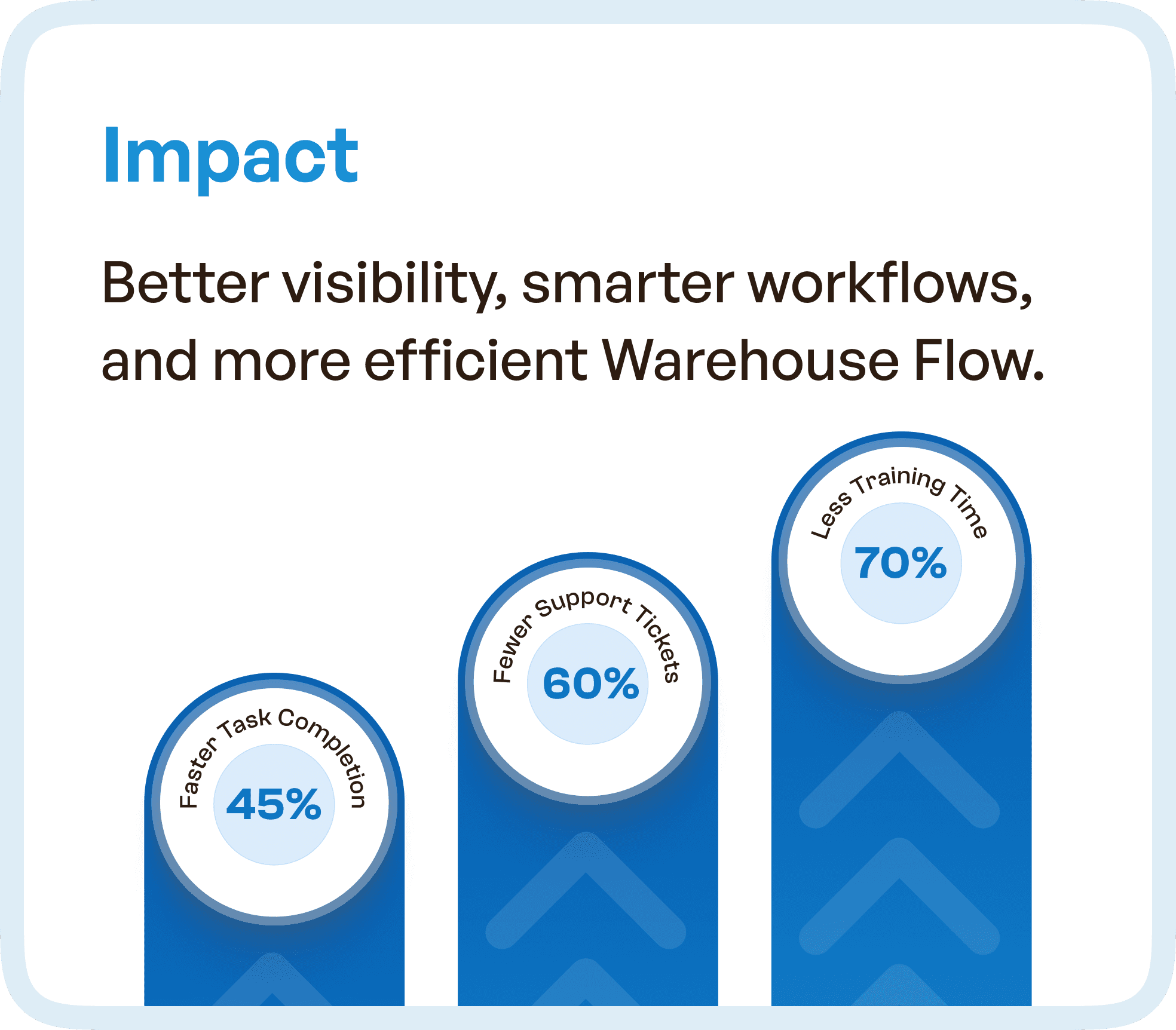
The Impact: Measurable Efficiency Gains
The redesign resulted in:
45% faster task completion
60% improvement in process visibility
70% reduction in training effort
These improvements highlight the impact of structured UX in enterprise systems.
Why UX Design is Critical in Pharma Systems
Pharmaceutical systems are:
Process-heavy
Compliance-driven
Data-intensive
Without strong UX:
Errors increase
Workflows slow down
Training becomes mandatory
With structured UX:
Processes become intuitive
Systems guide users
Efficiency improves significantly
Final Thoughts
Warehouse operations don’t need more features.
They need better structure and usability.
By redesigning workflows and simplifying interactions, complex enterprise systems can become:
Faster
More efficient
Easier to use