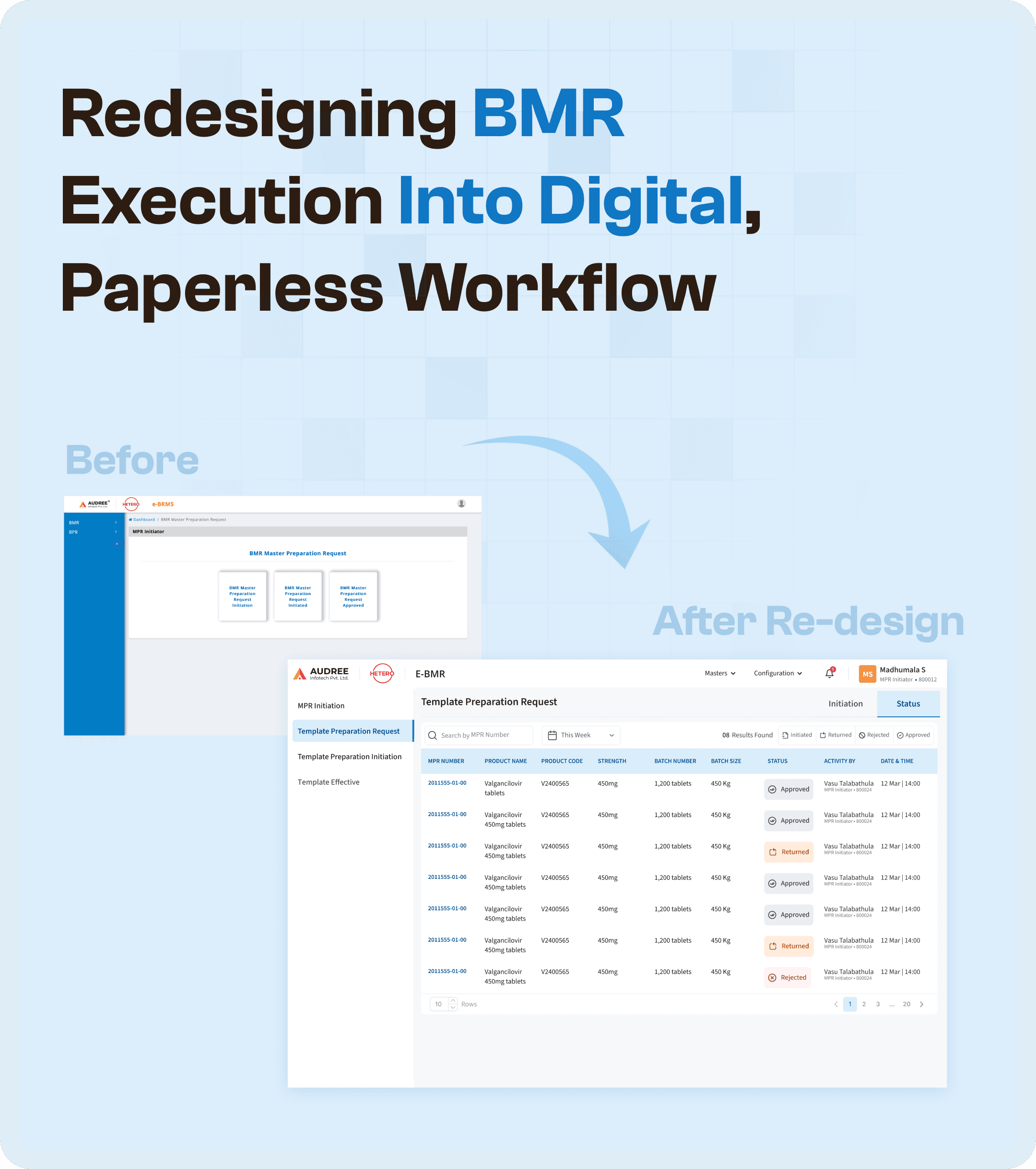

Introduction: The Need for a Digital BMR Workflow
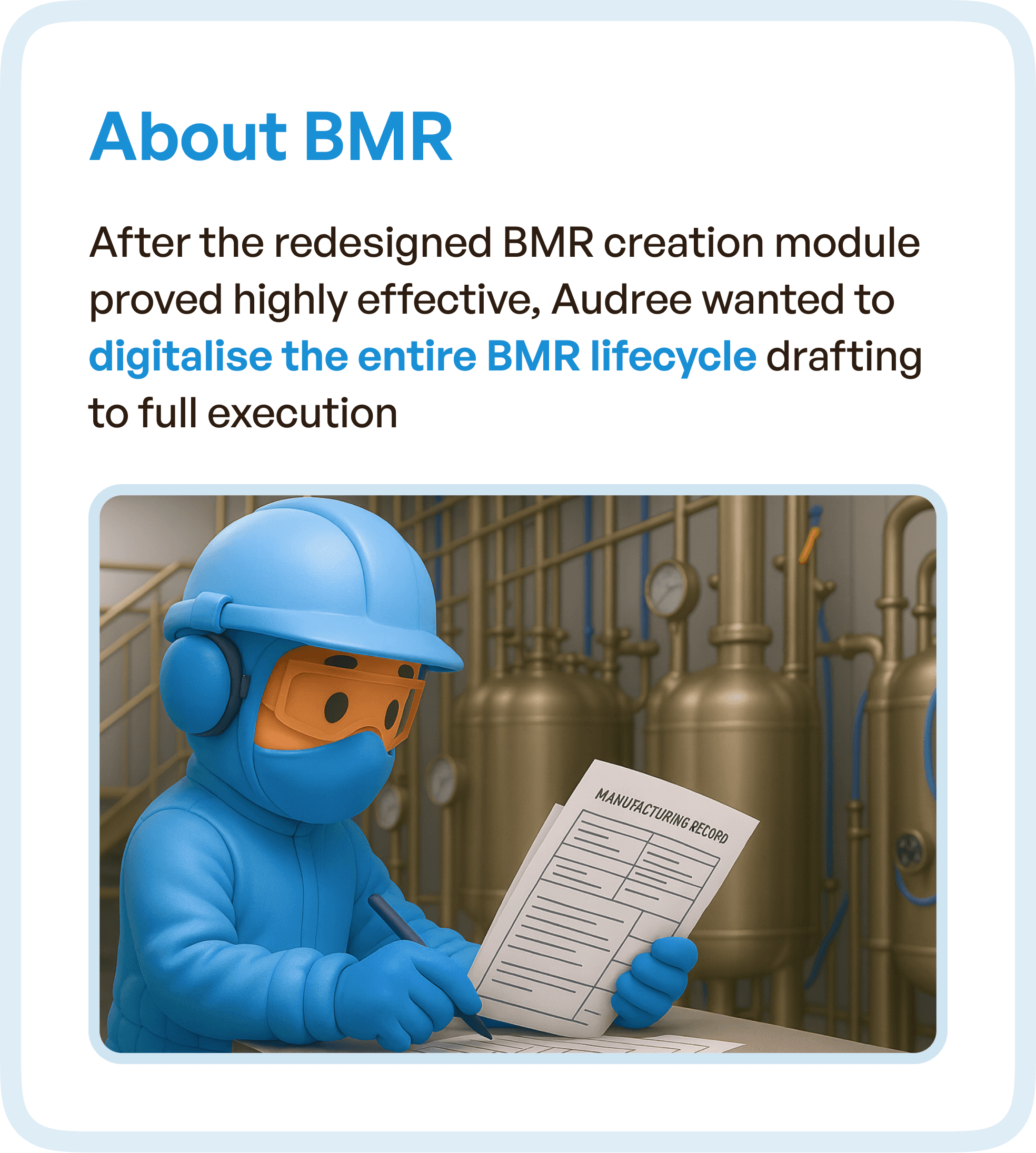
BMRs are an essential part of pharmaceutical production, but the traditional method of using paper logs can introduce numerous inefficiencies. These paper-based workflows require manual entries, constant coordination between teams, and extensive time spent tracking data. With each step needing verification and approval, the process becomes slow, cumbersome, and prone to human error.
Audree’s previous BMR system was particularly affected by scattered documentation, manual coordination, and slow approvals, all of which caused delays and increased the likelihood of mistakes. In addition, the lack of traceability in paper logs made it difficult to track changes or validate entries, especially during audits.
Our goal was clear: to replace the outdated, paper-based workflow with a digitally enhanced, structured BMR process that would increase speed, reduce errors, and improve compliance across the entire manufacturing cycle.
The Problem: A Scattered and Slow Paper-Based Workflow
Before our redesign, Audree’s BMR system faced several challenges:
Manual Logs and Repeated Entries: Employees had to manually enter data on paper forms, leading to redundancies and increased chances of errors.
Offline Coordination: The lack of a centralized system forced teams to rely on physical documents, emails, and other outdated communication methods to ensure that all parties were on the same page.
Lack of Clear Progress Visibility: Employees struggled to track the progress of each batch or identify bottlenecks in the process.
Validation and Traceability Issues: Due to the fragmented nature of the BMR system, it was difficult to validate entries and track changes through multiple systems and paper logs.
These issues not only led to slower production cycles but also risked non-compliance with regulatory standards.
Our Goal: Simplify and Digitize the BMR Lifecycle
Our objective was to transform the existing BMR process into a digital, clear, and traceable workflow. By streamlining the system, we aimed to:
Enhance Traceability: Replace manual entries and paper logs with a digital solution that tracks every step of the process in real-time.
Reduce Manual Coordination: Remove the dependency on emails, offline communication, and paper documentation by creating a central, transparent digital system.
Improve Clarity: Provide clear visual cues and easy-to-follow steps to help users understand the status of each batch and the actions required.
Our redesign was aimed at creating a more efficient, compliant, and faster BMR process that would streamline operations from batch creation to execution.
Our Approach: Mapping the BMR Lifecycle into a Guided Digital Workflow
1. Mapping Real Plant Workflows
We started by closely mapping Audree’s existing plant workflows, studying how each department interacts with the BMR system. We identified areas where manual work was most prevalent, focusing on repetitive data entry, approval delays, and lack of visibility across teams.
2. Rebuilding the Lifecycle
We restructured the entire BMR lifecycle into a more digitally intuitive system. By breaking down the workflow into clear, actionable steps, we eliminated unnecessary bottlenecks and streamlined each task. The redesign focused on improving the user experience (UX) by minimizing confusion, enhancing clarity, and guiding users through each phase of the process.
3. Creating Clear Visual Cues and Structured Navigation
Our design introduced structured screens, visual progress indicators, and contextual cues at every stage of the workflow. Users could now see at a glance where they were in the process and what actions were required next.
4. Eliminating Paper Logs
The redesigned system removed paper dependency entirely. By digitizing forms and integrating real-time data capture, we improved traceability and ensured that each step was automatically recorded in the system.
Key Design Highlights: A Streamlined, Intuitive BMR Process
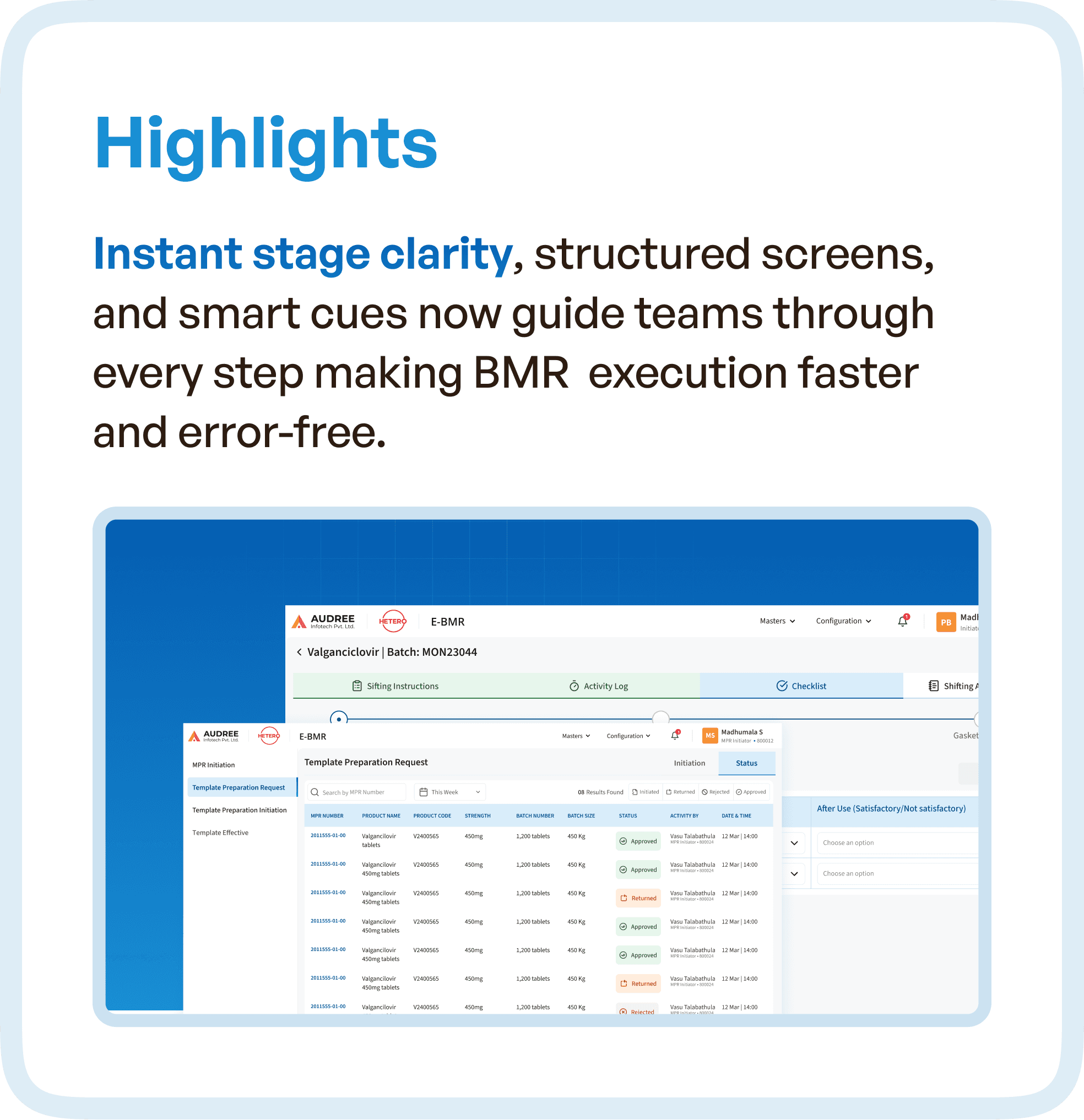
The final design resulted in a streamlined BMR process that greatly improved usability, speed, and clarity. Some of the key highlights include:
Instant Stage Clarity: Each stage of the BMR process is clearly defined, with visual cues indicating the current status. This transparency ensures that users can track progress effortlessly.
Role-Based Actions: We made sure that only the relevant actions for each role (e.g., QA, production, and operations) were presented, reducing clutter and increasing efficiency.
Smarter Forms: The new system introduced smart fields, auto-filled data, and grouped inputs, which drastically reduced manual entry and minimized the chances of errors.
Clear Progression Cues: We added clear stage indicators and lifecycle cues that help users understand where they are in the process and what actions need to be taken next.
The Impact: Faster BMR Execution with Less Manual Effort
The redesigned BMR system has already had a significant impact on Audree’s manufacturing processes:
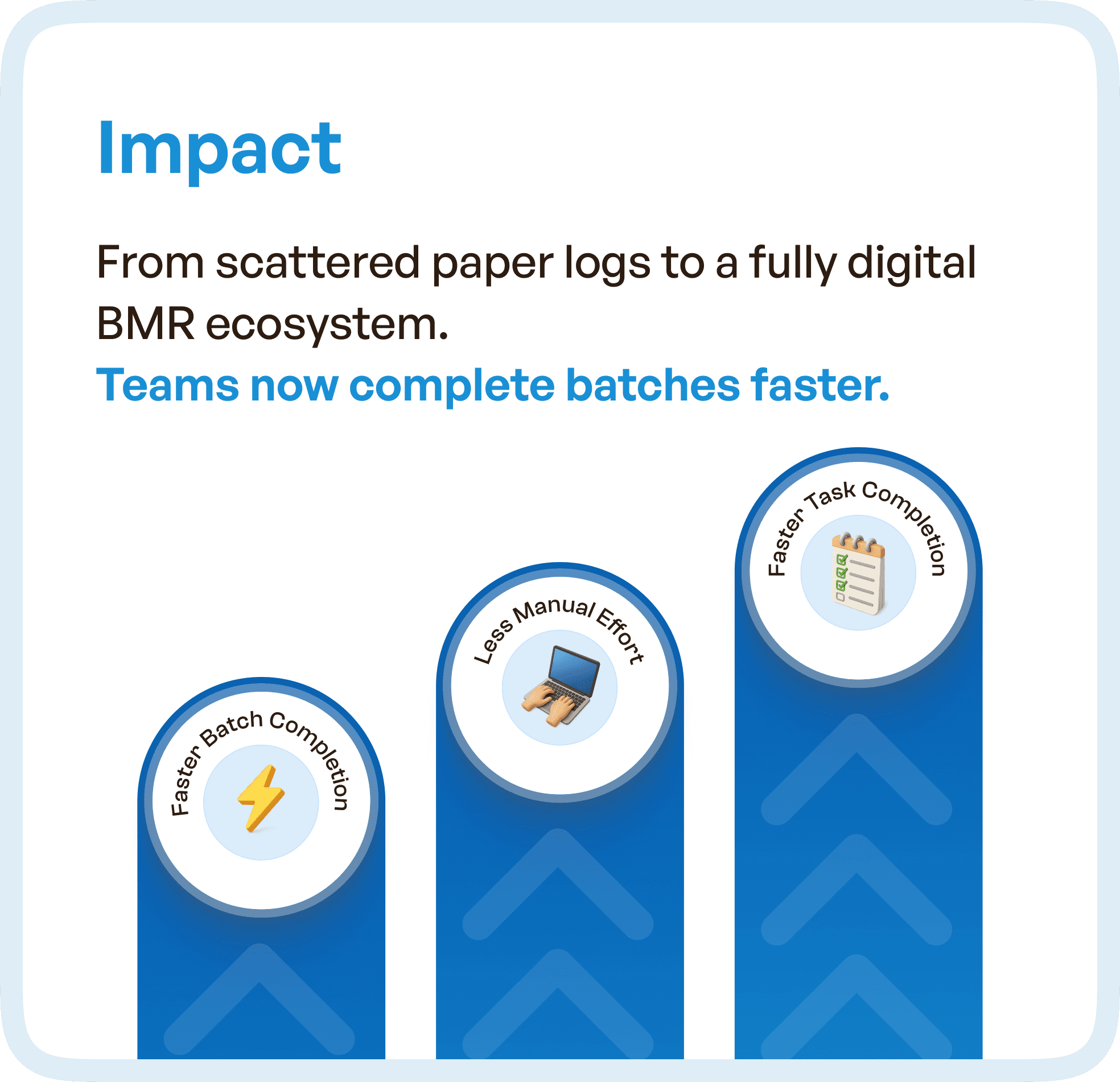
Faster Task Completion: The streamlined system has drastically reduced the time it takes to complete each step in the BMR process. This has accelerated the overall batch manufacturing timeline, allowing teams to move through production cycles more quickly.
Reduced Manual Effort: By eliminating manual log entries, repetitive data input, and offline coordination, the new system has significantly reduced the manual workload on employees, freeing them up to focus on more value-added tasks.
Improved Traceability and Compliance: The digital system now tracks every action in real-time, providing full traceability and a more compliant workflow. This is especially important for audits, where detailed documentation is required to ensure regulatory compliance.
Conclusion: A Future-Ready BMR System for Pharma
The redesigned BMR execution system is a powerful tool for pharmaceutical manufacturers, providing a clear, digital workflow that improves speed, clarity, and compliance. By removing the inefficiencies of paper-based processes, the new system allows teams to work faster and more confidently, all while ensuring that the necessary regulatory standards are met.
With its intuitive interface, real-time data tracking, and guided workflow, the BMR system is now future-ready, able to scale with the growing demands of the pharmaceutical industry. Audree’s manufacturing teams can now complete batches faster, with greater accuracy and less reliance on manual coordination.
If you’re facing similar challenges in your manufacturing or production processes, Upslide Design Studio can help you redesign your systems to be faster, clearer, and more compliant.