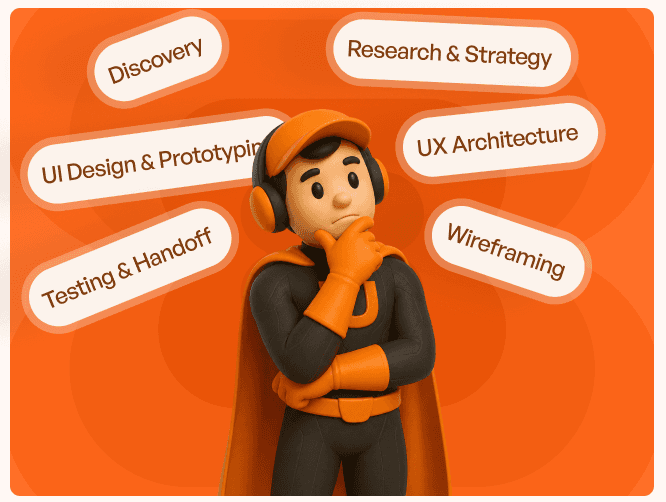
Is Product UX Really About the User?
Yes, but not fully.
Most companies genuinely want products to feel smooth, easy, and enjoyable because better experiences increase adoption and retention. But business goals are always present behind product decisions.
Successful products are designed around metrics like:
User retention
Session duration
Conversion rates
Purchase behavior
Engagement
Subscription growth
This means UX often becomes a balance between:
Helping users achieve goals efficiently.
And encouraging users to spend more time, attention, or money.
The challenge is that users rarely notice these psychological design mechanisms happening in real time.

UX Design Is Deeply Connected to Human Psychology
Modern UX design is heavily influenced by behavioral psychology.
Designers study:
Attention patterns
Decision fatigue
Reward systems
Habit formation
Cognitive biases
Emotional responses
Products use these principles to guide user behavior.
Sometimes positively.
Sometimes manipulatively.
This is why understanding ethical UX design is becoming increasingly important in the digital product industry.
How Instagram Uses UX Psychology to Increase Engagement
Social media platforms are among the strongest examples of behavioral UX design.
Platforms like Instagram are designed around continuous engagement loops.
Features such as:
Infinite scrolling
Auto-refresh content
Personalized recommendations
Notifications
Variable rewards
are built using psychological patterns similar to slot-machine behavior systems.
Users never fully know what content appears next.
That unpredictability creates anticipation.
Anticipation keeps users scrolling longer.
Longer engagement increases advertising revenue.
This demonstrates how UX design directly impacts business monetization.
From a usability perspective, the experience feels smooth and addictive.
From a psychological perspective, attention itself becomes the product.
Amazon’s UX Strategy: Building Trust to Increase Purchases
Amazon provides another interesting example of strategic UX design.
The platform uses subtle interface patterns to increase confidence during purchasing decisions.
Examples include labels such as:
“Amazon’s Choice”
“Limited Time Deal”
“Best Seller”
“Only 3 Left”
These elements reduce hesitation.
Users interpret these signals as trust indicators.
This technique is rooted in behavioral principles like:
Social proof
Scarcity bias
Authority bias
The interface feels informative.
But it also guides purchasing behavior intentionally.
This is where conversion-focused UX design becomes powerful.
Good UX doesn't only simplify navigation—it influences decisions.
Apple’s Pricing UX and Decision Architecture
Apple is known for minimal interface design and premium product positioning.
But their pricing layouts also demonstrate advanced UX psychology.
For example:
When users compare multiple pricing tiers side-by-side, slightly more expensive options often appear significantly more valuable.
This is called anchoring psychology.
A higher-priced option changes perception of surrounding prices.
As a result:
Users frequently select mid-tier or higher-tier products without consciously realizing how the layout influenced their decision.
The interface remains clean and elegant.
Yet the product architecture strategically shapes purchasing behavior.
The Fine Line Between Helpful UX and Manipulative UX
Not all persuasive UX is harmful.
In fact, many UX principles genuinely improve usability.
Examples include:
Highlighting important actions
Simplifying checkout flows
Reducing decision overload
Guiding onboarding steps
The problem appears when products prioritize business metrics at the expense of user well-being.
This leads to what many call:
Dark patterns
Manipulative UX
Addictive interaction design
Examples include:
Hard-to-find unsubscribe buttons
Confusing pricing structures
Forced continuity subscriptions
Excessive notifications
Endless engagement loops
These practices may improve short-term metrics but damage long-term trust.
Ethical UX Design Is Becoming More Important
As users become more aware of product psychology, ethical product design is becoming a larger conversation within the UX industry.
Ethical UX focuses on:
Transparency.
User control.
Honest communication.
Respectful engagement.
Accessible experiences.
Instead of trapping users inside systems, ethical UX empowers them.
This creates healthier long-term relationships between products and users.
At Upslide Design Studio, we believe strong UX should balance:
Business objectives
Human behavior
User trust
Product clarity
Because sustainable products depend on trust - not manipulation.
Why Businesses Still Need Strong UX Design
Despite these concerns, good UX remains essential.
Poor user experience creates:
Confusion
Drop-offs
Frustration
Lower retention
Reduced conversions
Businesses still need optimized interfaces.
But optimization should not come at the cost of user respect.
The most successful digital products often achieve both:
Strong business performance.
And genuinely useful experiences.
The Future of Product UX
The future of UX design will likely become even more behavior-driven due to:
AI personalization
Predictive interfaces
Adaptive experiences
Data-driven recommendations
As products become smarter, designers will carry greater responsibility.
The question will no longer be:
"Can we influence user behavior?"
Because every interface already does.
The better question becomes:
"How responsibly should we influence it?"
Final Thoughts: UX Always Shapes Behavior
Every digital product influences users in some way.
Buttons, Notifications, Layouts, Pricing, Recommendations, Spacing & Colors. Everything affects decisions.
Good UX design simplifies experiences.
But modern product UX also shapes attention, emotion, trust, and behavior.
Understanding this reality helps designers create better systems—and helps users become more aware of the products they interact with daily.
At its best, UX should create clarity, confidence, and value.
Not confusion disguised as convenience.