

In the rapidly evolving landscape of B2B SaaS, product decisions are only as good as the insights driving them. However, many teams either skip user research altogether or, worse, employ the wrong methods, resulting in misguided insights and poor product decisions. The real problem is not a lack of research but the misuse of research methods. Understanding the right UX research methods can transform how SaaS teams approach product development, leading to better user experiences and business outcomes.

The Real Problem: Teams Use the Wrong Research Method
Most SaaS teams find themselves at a crossroads when it comes to user research. They either neglect it, trusting their instincts over data, or they employ random methods like surveys or analytics, hoping to stumble upon useful insights. This approach often leads to misinterpretations and poor product decisions. For instance, relying solely on analytics might show a drop in user engagement, but it won't reveal the underlying reasons for that decline.
The crux of the issue is not the absence of research but rather the inappropriate application of research methods. When teams choose the wrong method, they end up with insights that are either incomplete or misleading, leading to decisions that do not align with user needs or business goals.

What UX Research Methods Actually Are (System View)
UX research methods are tools designed to uncover specific aspects of user interactions. They provide insights into user behavior, intent, and friction points within a product. Different methods are tailored to answer different questions, emphasizing the need for a strategic approach to selecting the right tool for the right job.
Clarity Table
Type | What It Answers | Example | Use Case |
Qualitative | Why users behave this way | Interviews | Problem discovery |
Quantitative | What users are doing | Analytics | Pattern validation |
Behavioral | How users interact | Usability testing | Flow optimization |
Attitudinal | What users say | Surveys | Feedback collection |
No single method can provide the complete picture. Each has its strengths and limitations, and understanding these nuances is crucial for extracting meaningful insights that drive product success.
The Core Industry Mistake: Using One Method for Everything
One of the most common mistakes in the industry is relying on a single research method, such as analytics, surveys, or feedback, for all insights. This myopic approach can lead to skewed conclusions, as data typically reveals what is happening but not why.
Diagnostic Table
Situation | Method Used | What’s Missing | Result |
Drop-offs in onboarding | Analytics | User intent | Wrong fixes |
Feature feedback | Surveys | Real usage behavior | Misleading insights |
UX complaints | Support data | Root cause analysis | Surface-level fixes |
The wrong method leads to the wrong conclusions, which can quickly derail product development efforts. It is essential to employ a mix of methods to ensure a comprehensive understanding of user needs and behaviors.
Key UX Research Methods (Explained with Context)
This section delves into the core UX research methods, providing insights into what each method accomplishes, when it should be used, and common pitfalls to avoid. Understanding these elements is critical for maximizing business value.
Deep Table
Method | Best For | When to Use | Common Mistake | Business Value |
User Interviews | Understanding user intent | Early-stage / problem discovery | Asking leading questions | Better product direction |
Usability Testing | Identifying friction | Before/after feature launch | Testing too late | Reduced rework |
Analytics | Identifying patterns | Post-launch | Ignoring “why” | Data-backed decisions |
Surveys | Collecting feedback | Large user base | Over-relying on opinions | Scalable insights |
A/B Testing | Optimizing decisions | Mature product stage | Testing without hypothesis | Conversion improvement |
Each method addresses a different layer of the problem, making it imperative to select the right tool based on the specific challenge at hand.

How to Choose the Right UX Research Method (Decision Framework)
Each method addresses a different layer of the problem, making it imperative to select the right tool based on the specific challenge at hand.
Choosing the correct UX research method is more important than the act of conducting research itself. The decision table below outlines the appropriate method for various common problems.
Decision Table
If Your Problem Is | Use This Method | Why |
Users dropping off | Usability testing | Identifies friction |
Don’t understand users | Interviews | Reveals intent |
Need patterns | Analytics | Shows behavior |
Need feedback at scale | Surveys | Collects opinions |
Want to optimize flows | A/B testing | Validates changes |
The insight here is clear: the choice of method can significantly impact the effectiveness of your research and the subsequent product decisions.
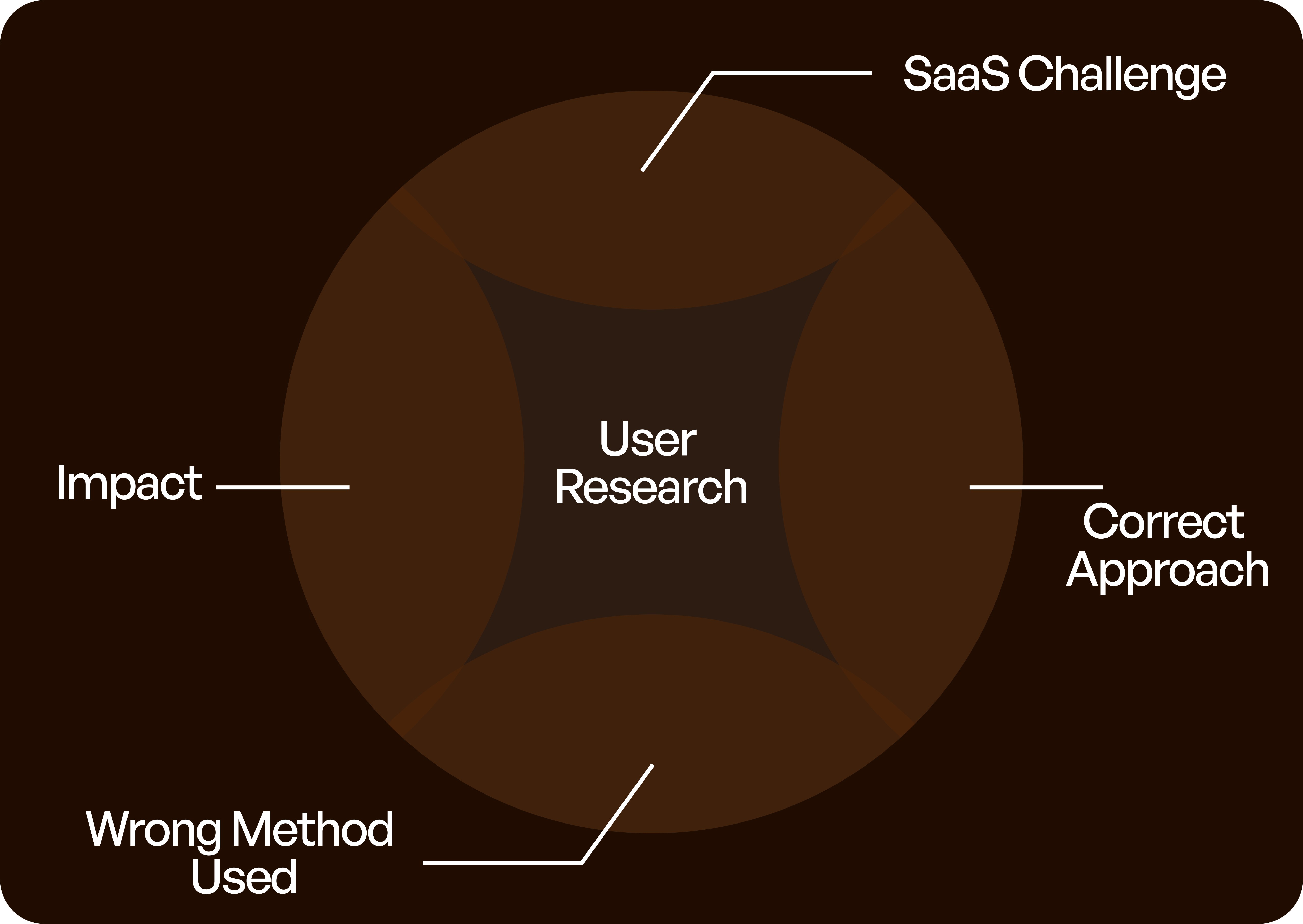
Why UX Research Methods Matter More in B2B SaaS
In the B2B SaaS domain, the stakes are higher due to complex workflows, multi-role users, and the high cost of mistakes. The wrong research approach can lead to costly errors.
Reality Table
SaaS Challenge | Wrong Method Used | Correct Approach | Impact |
Complex onboarding | Analytics only | Interviews + testing | Better activation |
Multi-role systems | Surveys | Role-based research | Better usability |
Feature overload | No research | Behavioral insights | Better prioritization |
For SaaS companies, incorrect research methods can lead to expensive mistakes, making informed method selection crucial for success.
The Upslide Approach
At Upslide, we advocate for a multi-method strategy that focuses on workflows rather than just screens. By combining multiple methods, we translate insights into actionable product decisions that drive business outcomes.
Positioning Table
Typical Approach | Upslide Approach | Business Outcome |
Single method use | Multi-method strategy | Complete insights |
One-time research | Continuous learning | Ongoing improvement |
Insight only | Insight → execution | Faster results |
With over 50 enterprise redesigns, including work with governments and startups, Upslide is positioned as a leader in translating UX research into tangible business growth.

Final Insight
UX research methods are tools, not strategies. Using the wrong method leads to wrong product decisions, which can be costly and detrimental to business outcomes. Good research is not about gathering more data, but about selecting the right method to extract actionable insights.
Position Upslide as your partner of choice to expertly choose, execute, and translate UX research into business outcomes that matter.
Further reading:
better user experiences — Link to UI/UX design services