
What UX Strategy Actually Means (System-Level View)
UX strategy is not merely about designing interfaces; it's about creating a decision-making framework that aligns user needs, business goals, and product decisions. This alignment ensures that every design choice contributes to overarching business objectives, rather than just fulfilling immediate design requirements.
Consider it a system-level approach, where UX strategy serves as the connective tissue between product decisions and business outcomes. The strategy is about setting a course for your product that is informed by a deep understanding of the market and user requirements, ensuring that every tactical decision is in service of a broader vision.
Deep Table:
Layer | Without UX Strategy | With UX Strategy | Business Impact |
Decision-making | Reactive | Structured | Better alignment |
Product direction | Feature-driven | Outcome-driven | Higher adoption |
UX consistency | Fragmented | Unified | Better usability |
Growth | Unpredictable | Scalable | Sustainable growth |
UX strategy ultimately creates a unified experience that aligns with business goals, facilitating sustainable growth and ensuring that design efforts translate into meaningful business outcomes.
The Core Industry Mistake: Treating UX as Design, Not Strategy
A common mistake in the industry is the reduction of UX to a series of design deliverables and UI improvements, without addressing the strategic layer. This approach focuses on surface-level fixes, leaving systemic issues unresolved. As a result, teams often find themselves trapped in a cycle of reactive adjustments that fail to address underlying problems.
Without a strategic foundation, efforts to improve UX become fragmented. For example, focusing solely on individual feature designs can lead to a lack of consistency across the product. This results in a disjointed experience that confuses users and undermines the product's value proposition.
Diagnostic Table:
What Teams Do | Why It Fails | What Should Happen | Result |
Focus on UI | Surface-level fixes | Fix workflows | Real improvement |
Design per feature | No system thinking | Unified UX direction | Consistency |
Short-term fixes | No long-term vision | Strategic planning | Scalable UX |
The key insight here is that without a UX strategy, design becomes reactive, addressing symptoms rather than causes, and leading to inconsistent products.
Why UX Strategy Directly Impacts Business
UX strategy is not merely a design investment; it’s a business investment that directly impacts product adoption, retention, operational efficiency, and cost reduction. A well-executed UX strategy can transform a product from a collection of features into a cohesive, user-friendly system that meets business objectives.
When there's a gap in UX strategy, the product often suffers from inconsistent user experiences, leading to low adoption and growth stagnation. Conversely, a strategic approach ensures that each feature aligns with the overall product vision, enhancing usability and reducing churn.
Business Impact Table:
UX Gap | Product Impact | Business Outcome | Long-Term Effect |
No UX direction | Inconsistent experience | Low adoption | Growth stagnation |
Feature overload | Cluttered product | Poor usability | High churn |
Reactive fixes | Rework cycles | Increased cost | Inefficiency |
Poor alignment | Misaligned product | Lost opportunities | Weak positioning |
Thus, a strong UX strategy is fundamental to achieving predictable growth and maintaining a competitive edge in the market.
Key Components of UX Strategy (Core Framework)
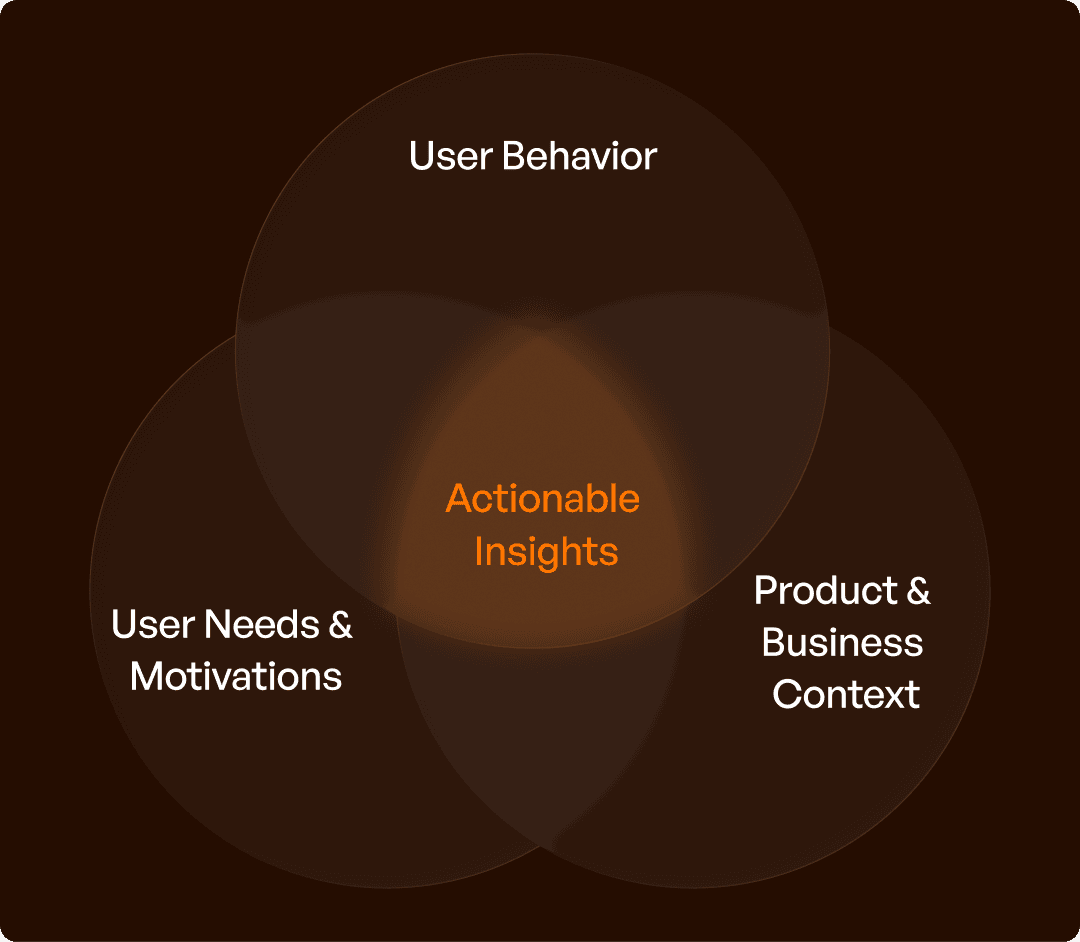
A robust UX strategy is built on several key components that together form a cohesive framework: business goals alignment, user understanding, product vision, experience principles, and a prioritization framework. Each of these components plays a critical role in ensuring that the product not only meets user needs but also contributes to business success.
Aligning UX with business goals ensures that the product's existence is justified and its value proposition is clear. User understanding involves deep research to accurately define the target audience, avoiding assumptions that lead to misguided solutions.
With a clear product vision, decision-makers can steer the product in a consistent direction, avoiding random shifts based on short-term pressures. Experience principles establish design rules that ensure cohesive and user-friendly experiences, while a prioritization framework helps in making informed decisions about which features to build first.
Framework Table:
Component | What It Defines | Mistake When Missing | Impact |
Business Alignment | Why the product exists | Disconnected UX | Poor ROI |
User Understanding | Who you're designing for | Assumptions | Wrong solutions |
Product Vision | Where product is going | Random decisions | Inconsistency |
UX Principles | Design rules | Ad-hoc UX | Poor usability |
Prioritization | What to build first | Feature overload | Inefficiency |
Each component is crucial in constructing a UX strategy that is not assumed but deliberately built to foster business success.
How UX Strategy Works in SaaS (Practical View)
In the context of SaaS, a UX strategy plays a pivotal role in aligning features with workflows, reducing complexity, and optimizing user journeys. This strategic alignment ensures that features do not merely add complexity but enhance the overall usability and adoption of the product.
For instance, a well-structured onboarding process with clear flows can substantially increase user activation rates. Similarly, when rolling out new features, a UX strategy ensures that these additions fit seamlessly into the existing system rather than creating unnecessary clutter.
SaaS Application Table:
Scenario | Without UX Strategy | With UX Strategy | Outcome |
Onboarding | Confusing steps | Clear flow | Better activation |
Feature rollout | Adds complexity | Fits into system | Better adoption |
Dashboard design | Data overload | Structured insights | Better usability |
By turning features into usable systems, a UX strategy helps SaaS products achieve their potential and drive business outcomes.
The Upslide Approach
Upslide adopts a unique approach by aligning UX with business outcomes, focusing on redesigning workflows rather than just the UI, and building scalable UX systems. This strategy-first approach ensures that the design is not merely about aesthetics but about enhancing usability and achieving higher adoption.
Unlike typical UI-first designs that are often feature-driven, Upslide prioritizes outcome-driven strategies that lead to better usability. By employing scalable systems instead of one-time redesigns, Upslide helps businesses achieve long-term efficiency.
Positioning Table:
Typical Approach | Upslide Approach | Business Outcome |
UI-first design | Strategy-first UX | Better usability |
Feature-driven | Outcome-driven | Higher adoption |
One-time redesign | Scalable systems | Long-term efficiency |
Having redesigned over 50 enterprise software products across the globe, including work with governments, enterprises, and startups, Upslide ensures that design is about running businesses better, not just looking better.

Final Insight
UX strategy is central to how products evolve over time. Without it, products risk becoming complex and inefficient, leading to low user satisfaction and retention. A strategic approach to UX ensures that every design decision is purposeful and aligned with business objectives, driving measurable outcomes.
For SaaS companies looking to build UX strategies that foster growth and reduce costs, partnering with Upslide can provide the necessary expertise and insights. With a proven track record in creating scalable, efficient software, Upslide positions itself as the ideal partner to help your product grow in the right direction.
Remember, UX strategy is not about design; it's about how your product grows.