
AI Is Making Personalization Smarter Than Ever
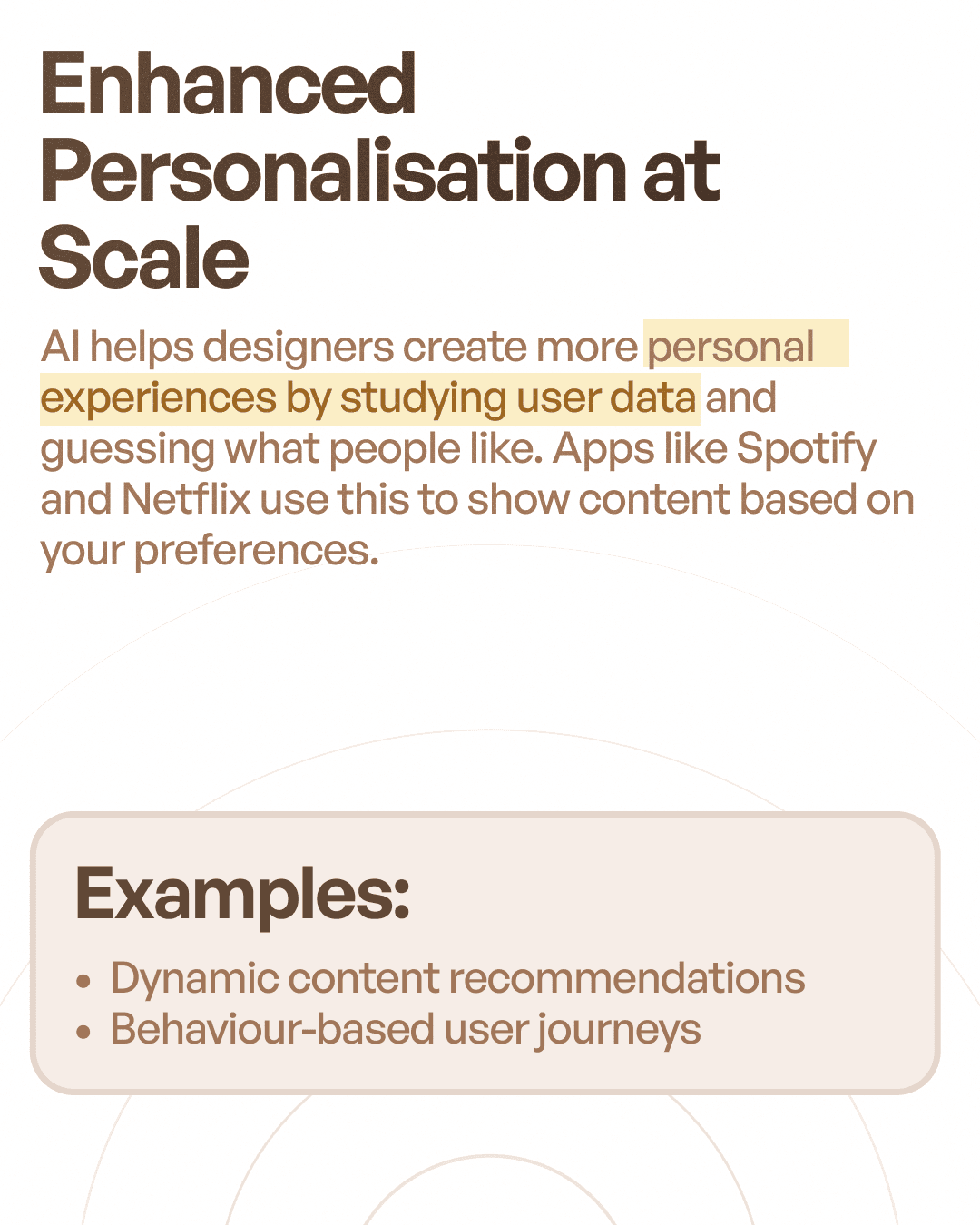
One of the biggest impacts of AI on design is personalization.
Traditionally, products showed the same experience to every user.
Today, AI enables products to adapt based on user behavior, preferences, goals, and context.
When Spotify creates personalized playlists or Netflix recommends movies tailored to your viewing habits, AI is helping shape the experience.
Instead of designing one journey for everyone, designers now create systems that can adapt dynamically.
This creates experiences that feel more relevant, more useful, and often more engaging.
However, personalization introduces new design challenges.
Designers must ensure that recommendations remain helpful rather than intrusive and that users understand why certain content is being shown to them.
User Research Is Becoming Faster and More Scalable
Understanding users has always been one of the most important parts of UX design.
Traditionally, research involved interviews, usability testing, surveys, and observation.
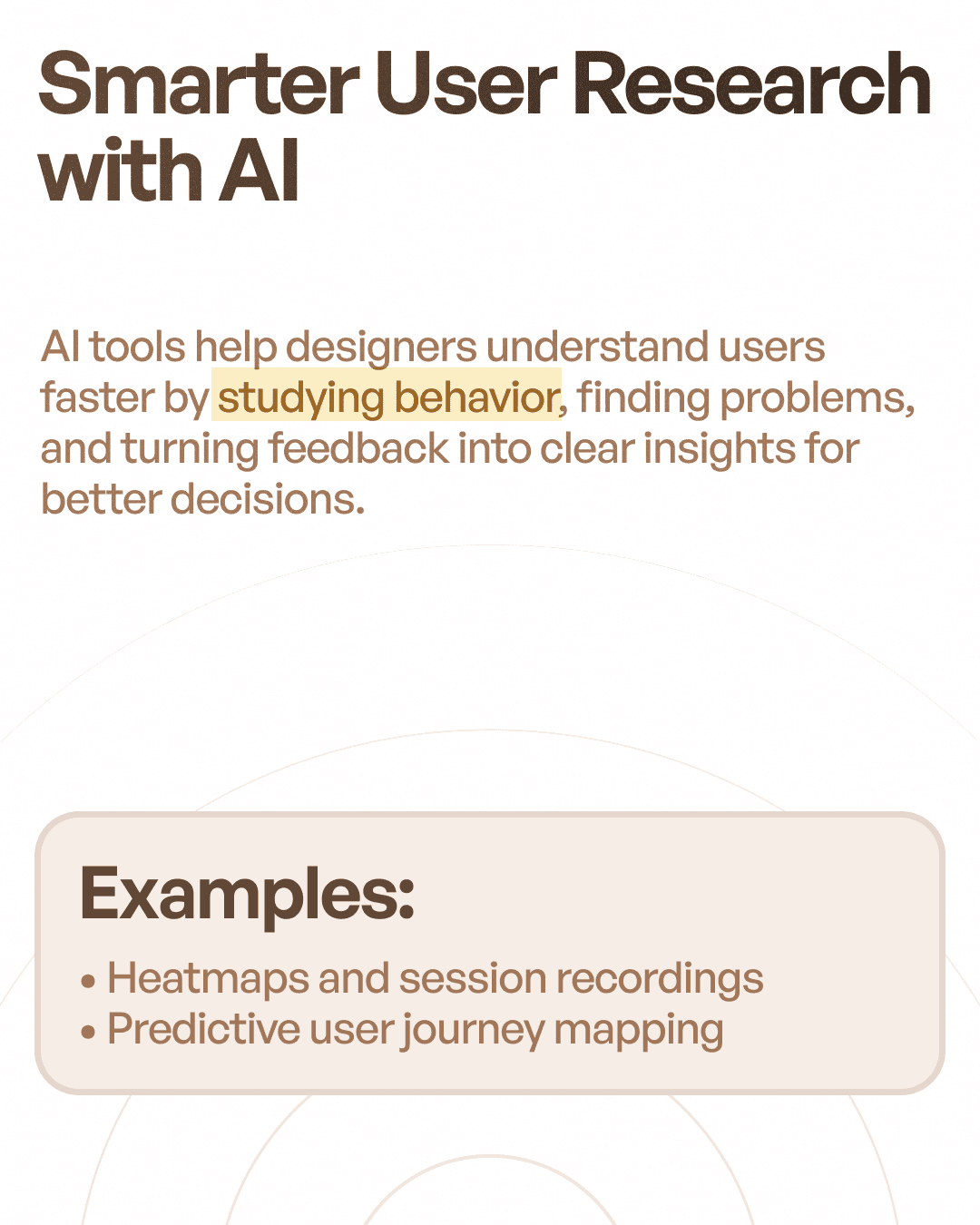
These methods remain valuable, but AI is helping teams process research at a much larger scale.
AI can analyze:
User feedback
Session recordings
Support tickets
Survey responses
Product usage patterns
What once took weeks of analysis can now be processed much faster.
Instead of manually reviewing thousands of comments, researchers can identify patterns, recurring frustrations, and emerging trends more efficiently.
This doesn't replace user research.
It allows researchers and designers to spend more time interpreting insights and solving problems rather than organizing data.
Conversational Interfaces Are Changing User Expectations
For decades, software interactions followed a predictable pattern.
Users clicked buttons, navigated menus, and filled out forms.
AI is introducing a different interaction model.
Users can now communicate with products using natural language.
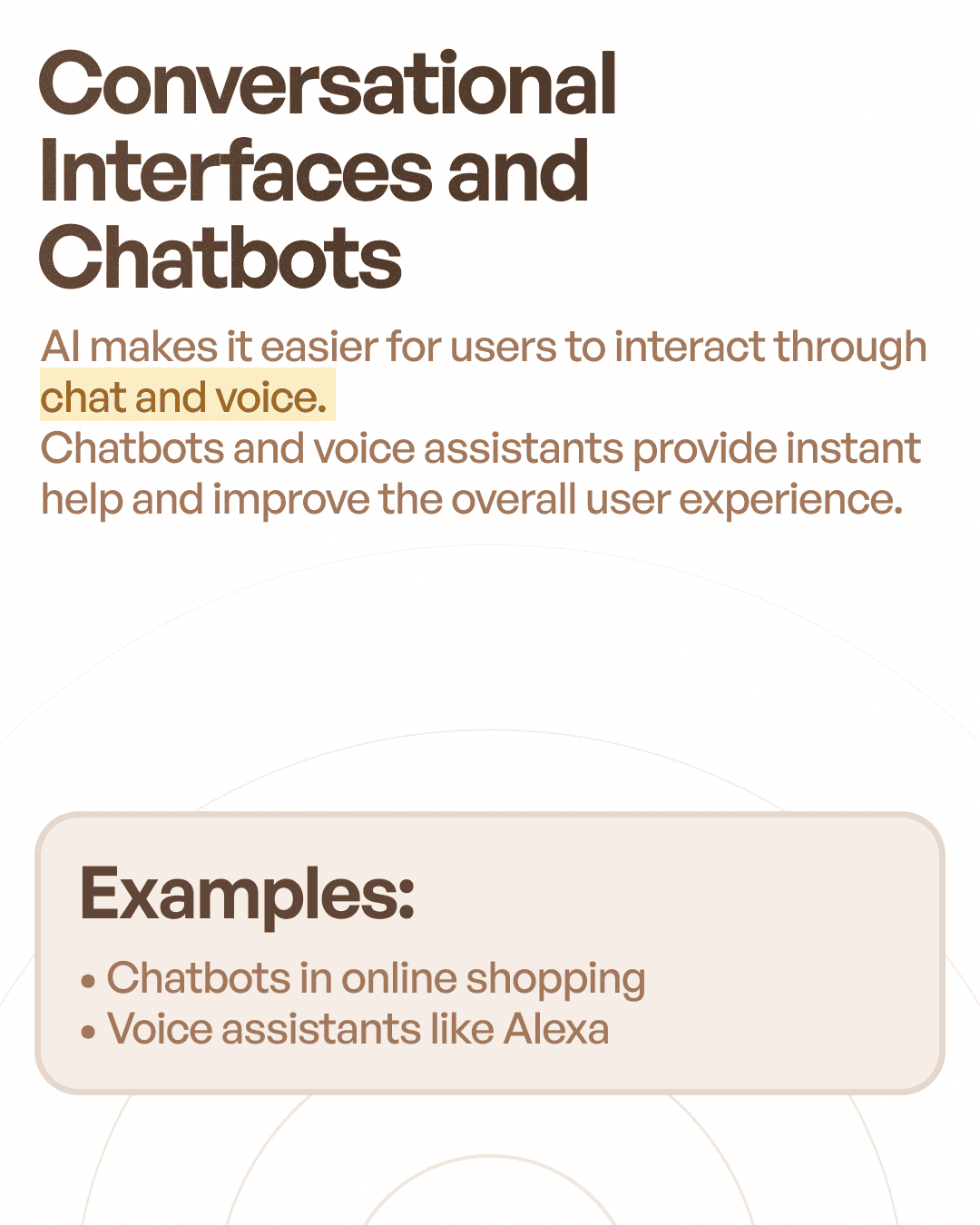
Chatbots, AI assistants, and conversational interfaces allow people to ask questions, request actions, and receive assistance in ways that feel more human.
Examples include:
Customer support chatbots
AI shopping assistants
Voice assistants
Enterprise AI copilots
As these interactions become more common, designers must rethink traditional interface patterns.
The challenge is no longer just designing screens.
It's designing conversations.
Designers need to consider tone, context, feedback, and error handling in entirely new ways.
AI Creates New Ethical Challenges
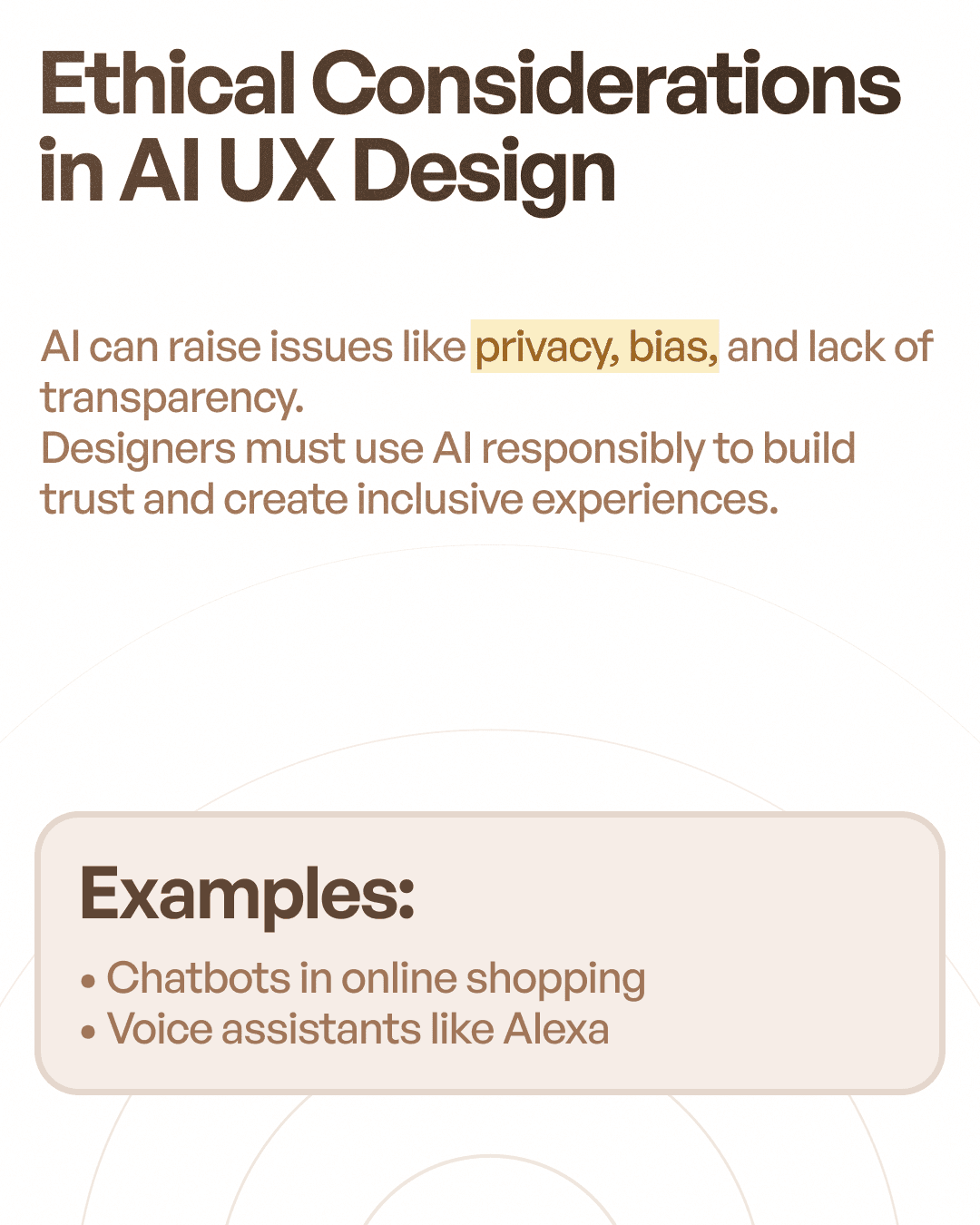
While AI offers powerful capabilities, it also introduces significant responsibilities.
Design decisions involving AI can impact privacy, fairness, trust, and transparency.
For example, users may not always understand:
How recommendations are generated
Why specific content appears
How their data is being used
Whether decisions are made by humans or algorithms
Poorly designed AI experiences can quickly erode trust.
As a result, ethical design is becoming increasingly important.
Designers must think beyond usability and ask questions such as:
Is the system transparent?
Is it fair?
Does it introduce bias?
Does the user maintain control?
The future of AI design is not just about creating smarter systems.
It's about creating responsible systems.
AI Is Becoming a Design Partner
AI is not only changing products.
It is also changing the design process itself.
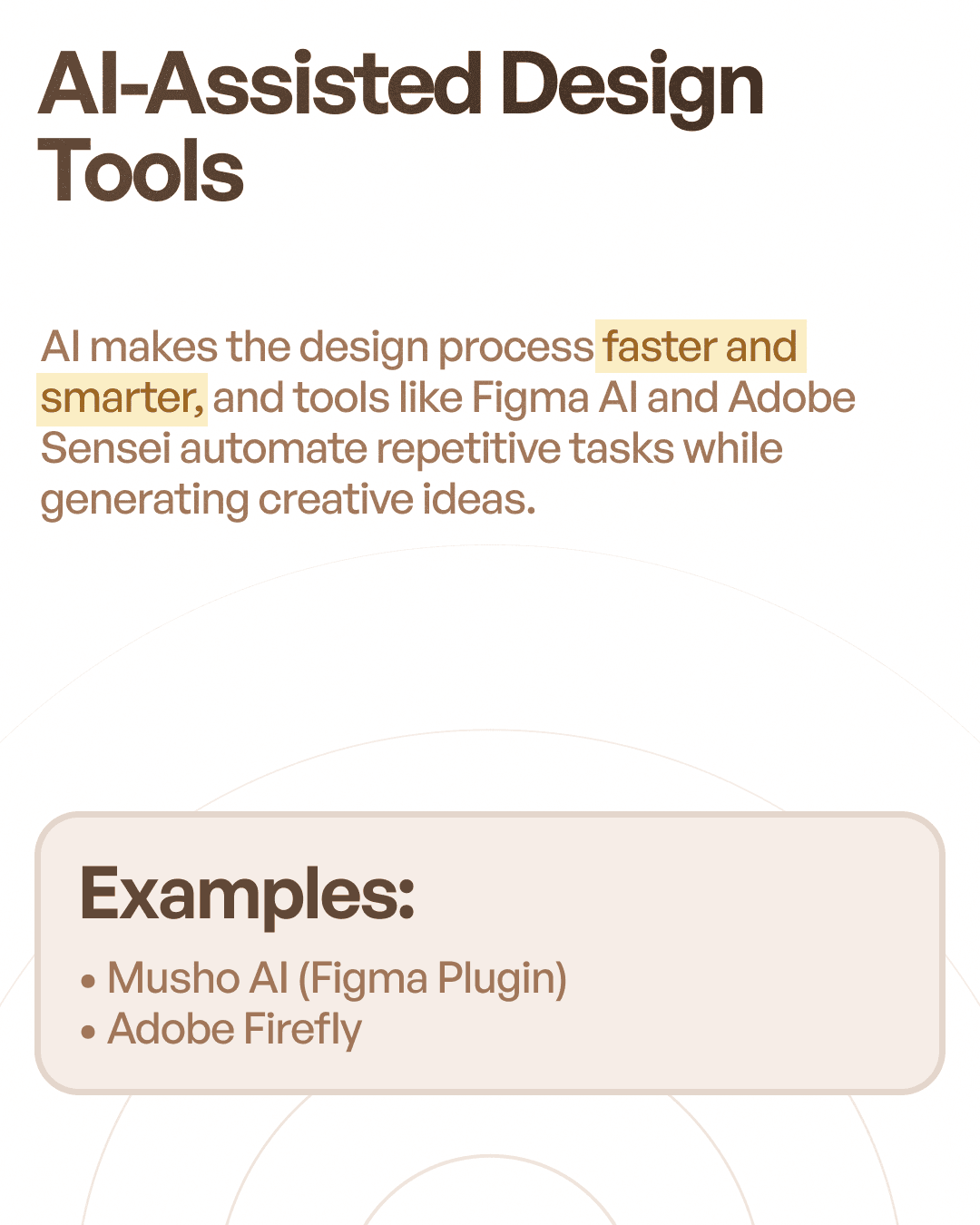
Modern design tools increasingly include AI-powered features that automate repetitive tasks and accelerate workflows.
Tools such as AI-powered assistants can help with:
Generating design variations
Writing UX copy
Creating prototypes
Organizing content
Producing visual assets
Conducting research summaries
This allows designers to move faster and explore more ideas within the same amount of time.
The value of AI lies in reducing repetitive work so designers can focus on higher-level thinking.
The goal is not to replace creativity.
The goal is to amplify it.
The Designer's Role Is Evolving
Whenever a new technology emerges, people ask whether it will replace designers.
The same question is now being asked about AI.
The reality is more nuanced.
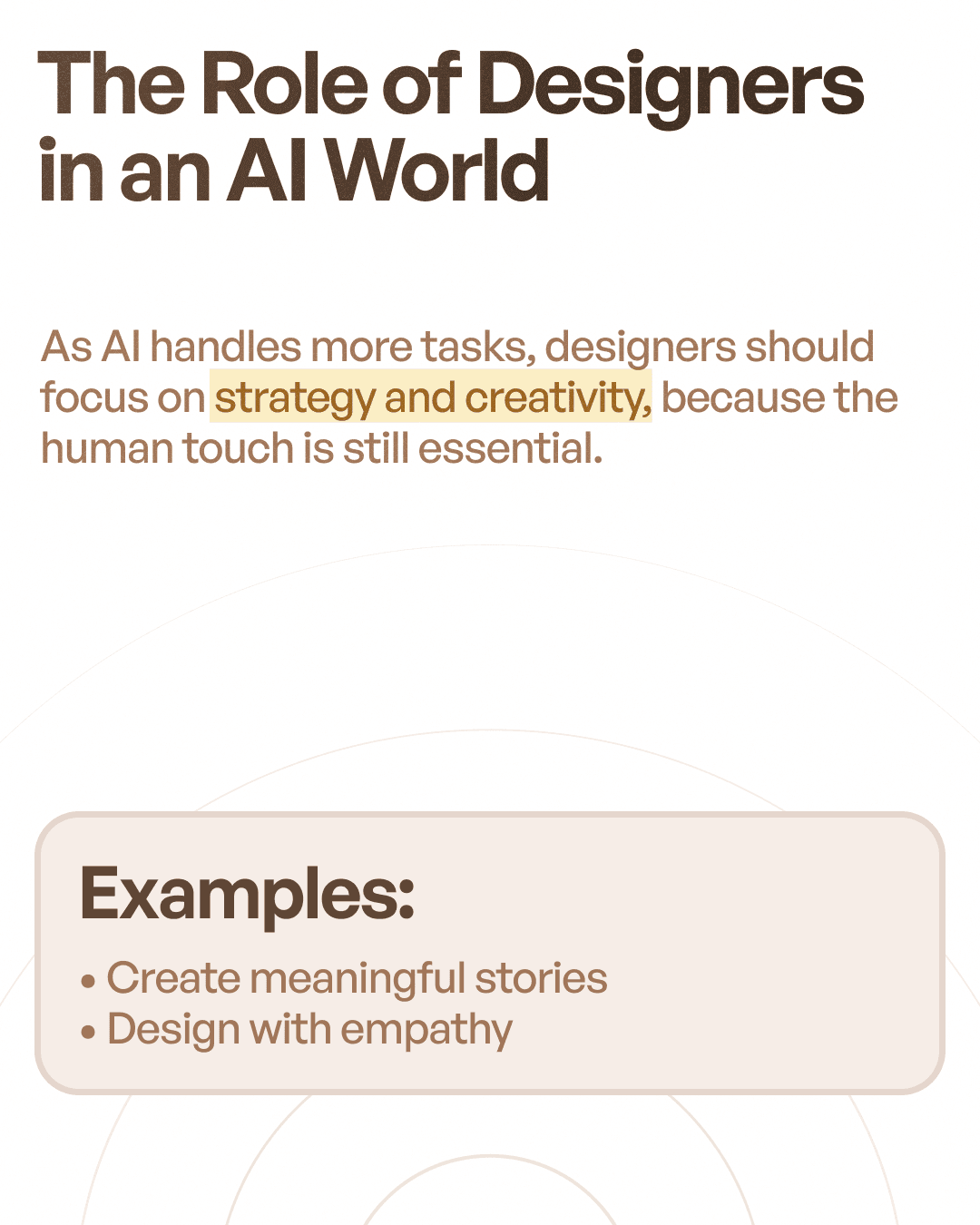
AI is becoming increasingly capable of producing screens, generating layouts, writing content, and creating visual assets.
But design has never been only about producing artifacts.
Design is fundamentally about understanding people and solving problems.
AI can generate solutions.
It cannot fully understand human context, emotions, business realities, organizational constraints, or cultural nuances.
Great design requires judgment.
It requires empathy.
It requires understanding why a problem exists before deciding how to solve it.
These remain deeply human capabilities.
What AI Cannot Replace
AI can process information at extraordinary speed.
It can generate thousands of options.
It can identify patterns across massive datasets.
But there are areas where human designers remain essential.
These include:
Strategic thinking
Problem framing
Empathy
Facilitation
Stakeholder alignment
Ethical decision-making
Business understanding
A designer's value increasingly comes from their ability to make sense of complexity rather than simply create screens.
As AI becomes more capable, these skills become even more important.
The Future of Design Is Human + AI
The most successful designers will not compete with AI.
They will collaborate with it.
Much like calculators changed mathematics without replacing mathematicians, AI is changing design without eliminating the need for designers.
Designers who learn how to leverage AI effectively will gain significant advantages.
They will be able to:
Research faster
Explore more concepts
Test ideas quickly
Prototype rapidly
Spend more time on strategy
The future is unlikely to be human versus AI.
It is far more likely to be human plus AI.
Final Thoughts
Artificial Intelligence is transforming the design industry in ways we are only beginning to understand.
It is changing how products are built, how users interact with technology, and how designers work.
AI can help personalize experiences, accelerate research, support conversations, and automate repetitive tasks.
But despite these advances, the core purpose of design remains unchanged.
Design is still about understanding people.
Design is still about solving problems.
Design is still about creating experiences that improve lives.
The tools may change.
The responsibility of the designer does not.
The designers who thrive in the age of AI will not be the ones who simply use AI tools.
They will be the ones who combine technology with empathy, strategy, critical thinking, and human understanding.
Because in the end, great experiences are still designed for people.


