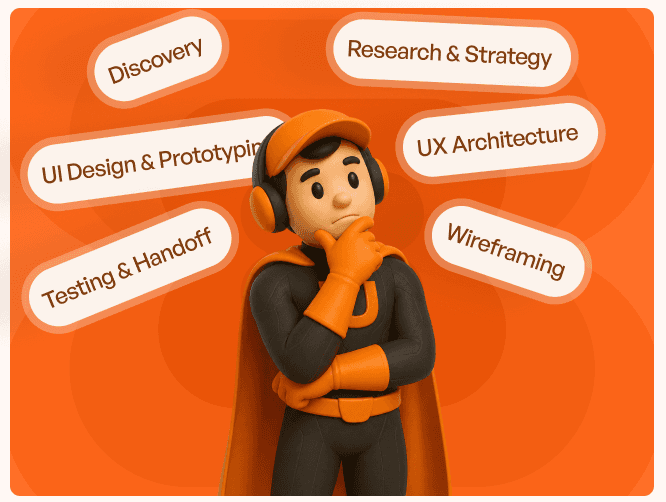

What Are User Personas in UX Design?
User personas are structured representations of target users based on:
Behaviors
Goals
Needs
Challenges
They help teams move from generic assumptions to specific, user-centered decision-making.
Instead of designing for “everyone,” personas define who the product is actually for.
The Core Problem: Design Without User Clarity
Many teams start designing with:
Feature requirements
Business goals
Visual references
But they miss one critical layer—user understanding.
Without personas:
Design decisions become subjective
Teams rely on assumptions
Products lose direction
This results in:
Poor usability
Inconsistent experiences
Low adoption rates
The Role of User Personas in Product Design
User personas bring clarity into the design process.
They help teams understand:
How users think
What users expect
How users behave
This transforms design from guesswork into informed decision-making.
The Impact: Designing for Real Users, Not Opinions
Every design decision should connect back to a user.
This includes:
layout choices
interaction patterns
content tone
feature prioritization
User personas ensure that design serves real user needs, not personal preferences.
How User Personas Improve Team Alignment
In product development, misalignment is common.
Designers, developers, and stakeholders often have different assumptions about users.
User personas act as a shared reference point.
They help:
Align goals across teams
Reduce conflicts in decision-making
Maintain consistency in design
When everyone designs for the same user, outcomes improve.
The Value of User Personas in UX Strategy
User personas go beyond documentation.
They directly influence:
Product strategy
Feature prioritization
Workflow design
Content structure
They turn empathy into practical design actions.
Why User Personas Matter in Enterprise and SaaS UX
Enterprise systems involve:
Multiple user roles
Complex workflows
Varied user expectations
Without personas:
Systems become generic
Workflows become inefficient
User experience becomes fragmented
With personas:
Experiences become targeted
Workflows align with real use cases
Usability improves significantly
When Should You Create User Personas?
User personas should be created early in the UX process:
During discovery phase
Before wireframing
Before UI design
They act as a foundation for:
User flows
Information architecture
Interaction design
Common Mistakes When Creating User Personas
Even when teams create personas, they often fail to use them effectively.
Common mistakes include:
Creating personas without real data
Making them too generic
Not integrating them into design decisions
Treating them as static documents
Effective personas should be:
Actionable
Specific
Integrated into workflows
How Upslide Design Studio Uses User Personas
At Upslide Design Studio, user personas are a core part of our UX process.
We use them to:
Understand user behavior in complex systems
Map workflows based on real needs
Guide design decisions across projects
This ensures that every product we design is:
User-centered
Structured
Scalable
Final Thoughts
Design is not about creating visually appealing screens.
It is about solving real problems for real users.
User personas provide the clarity needed to do that effectively.
Without them, design is based on assumptions.
With them, design becomes intentional, aligned, and impactful.