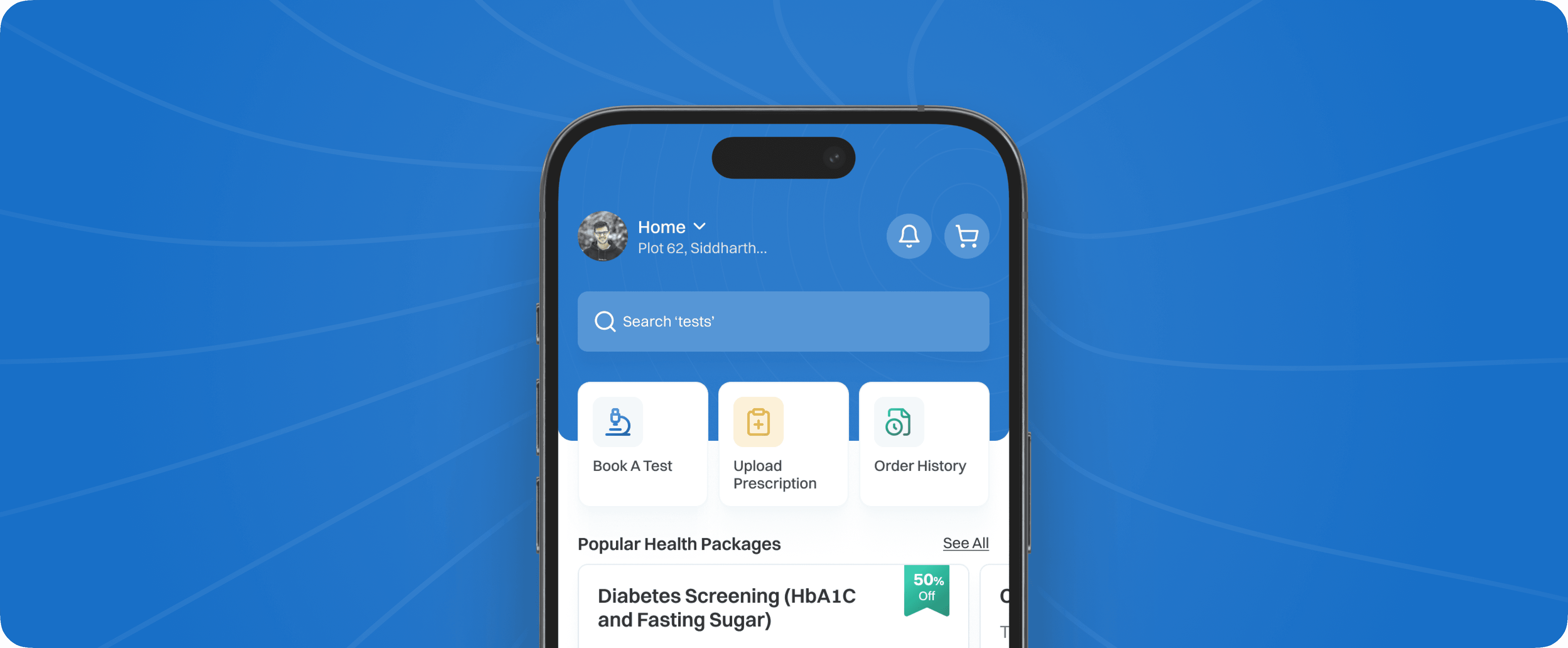
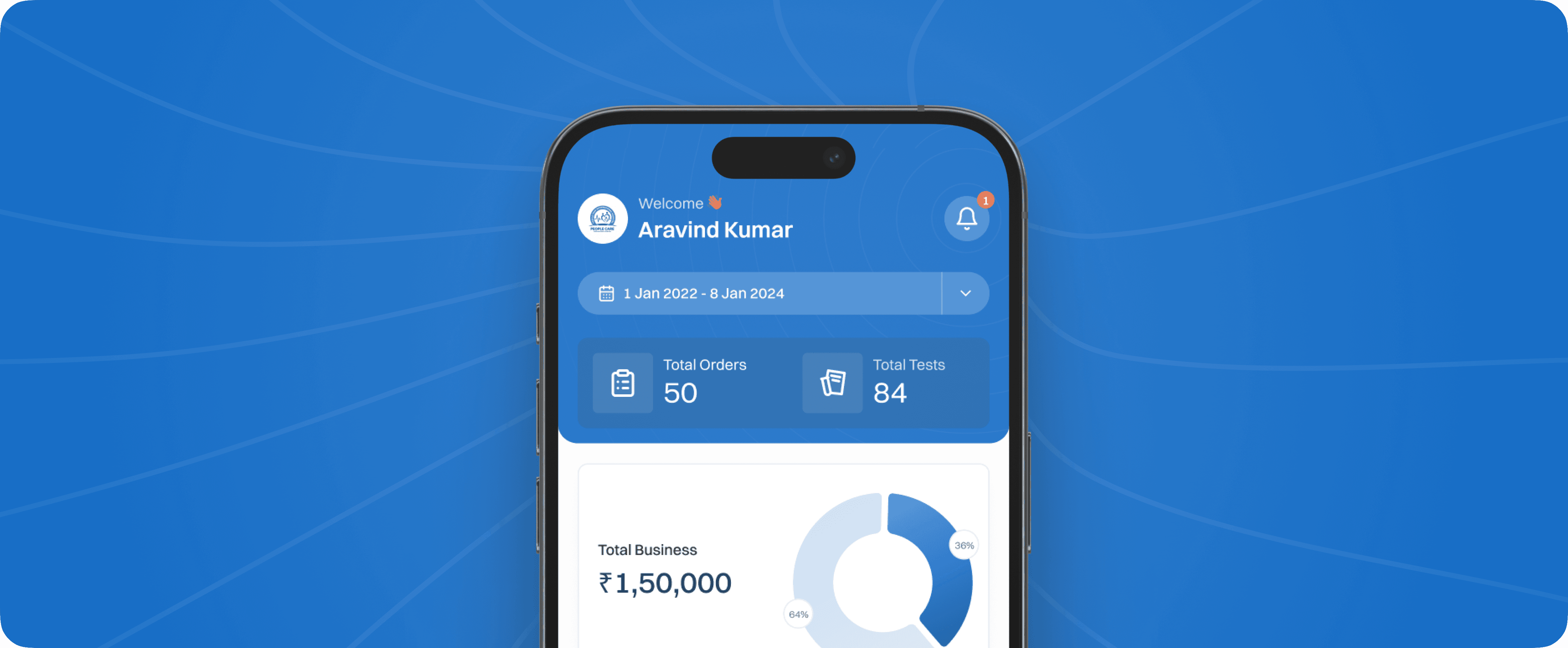
Redesigning Manual Sample Transfers Into a Structured Logistics Workflow
Redesigning Manual Sample Transfers Into a Structured Logistics Workflow
Redesigning Manual Sample Transfers Into a Structured Logistics Workflow
About Project
About Project
About Project
Logistics is Suvarna’s mobile application built for field pickup executives and logistics staff to manage diagnostic pickups, trips, counts, photo proof, and trip completion across operations.
Earlier, packet movement relied on calls and messages, causing missed pickups, lost samples, no timestamps, poor trip visibility, and heavy coordination between labs and logistics teams.
Our goal was to digitize pickup workflows with assigned trips, proof capture, and real-time status, ensuring accurate traceability, faster turnaround times, fewer errors, and operational visibility.
Logistics is Suvarna’s mobile application built for field pickup executives and logistics staff to manage diagnostic pickups, trips, counts, photo proof, and trip completion across operations.
Earlier, packet movement relied on calls and messages, causing missed pickups, lost samples, no timestamps, poor trip visibility, and heavy coordination between labs and logistics teams.
Our goal was to digitize pickup workflows with assigned trips, proof capture, and real-time status, ensuring accurate traceability, faster turnaround times, fewer errors, and operational visibility.
About Project
Health Care
Team
Varun kashetty, S.Madhumala
Subscription Category
Quick win
Project start Year
December 2024
Business Challenges
Business Challenges
Business Challenges
Low Retention Across Modules
Low Retention Across Modules
Low Retention Across Modules
Unstructured flows and inconsistent screens caused teams to avoid features, reducing adoption, visibility, and effective usage of logistics workflows.
Unstructured flows and inconsistent screens caused teams to avoid features, reducing adoption, visibility, and effective usage of logistics workflows.
Unstructured flows and inconsistent screens caused teams to avoid features, reducing adoption, visibility, and effective usage of logistics workflows.
Stuck in a Loop, Growth Stagnation
Stuck in a Loop, Growth Stagnation
Stuck in a Loop, Growth Stagnation
Manual coordination and repeated follow-ups slowed pickups, restricted scalability, and limited overall logistics growth.
Manual coordination and repeated follow-ups slowed pickups, restricted scalability, and limited overall logistics growth.
Manual coordination and repeated follow-ups slowed pickups, restricted scalability, and limited overall logistics growth.
Heavy training Requirement
Heavy training Requirement
Complex steps and unclear actions increased onboarding time, dependency on supervisors, and slowed daily pickup and trip execution.
Complex steps and unclear actions increased onboarding time, dependency on supervisors, and slowed daily pickup and trip execution.
Heavy training Requirement
Complex steps and unclear actions increased onboarding time, dependency on supervisors, and slowed daily pickup and trip execution.
Our Approach
Our Approach
Our Approach
User Flow
We mapped Logistics end-to-end pickup workflows to understand daily field operations and identify delays. This helped reduce manual coordination and streamline trip assignment, route execution, packet collection, proof capture, and delivery. The result ensured full traceability, faster execution, and reliable sample movement across diagnostic operations.
User Flow
We mapped Logistics end-to-end pickup workflows to understand daily field operations and identify delays. This helped reduce manual coordination and streamline trip assignment, route execution, packet collection, proof capture, and delivery. The result ensured full traceability, faster execution, and reliable sample movement across diagnostic operations.
User Flow
We mapped Logistics end-to-end pickup workflows to understand daily field operations and identify delays. This helped reduce manual coordination and streamline trip assignment, route execution, packet collection, proof capture, and delivery. The result ensured full traceability, faster execution, and reliable sample movement across diagnostic operations.
Key Problems
Key Problems
Key Problems
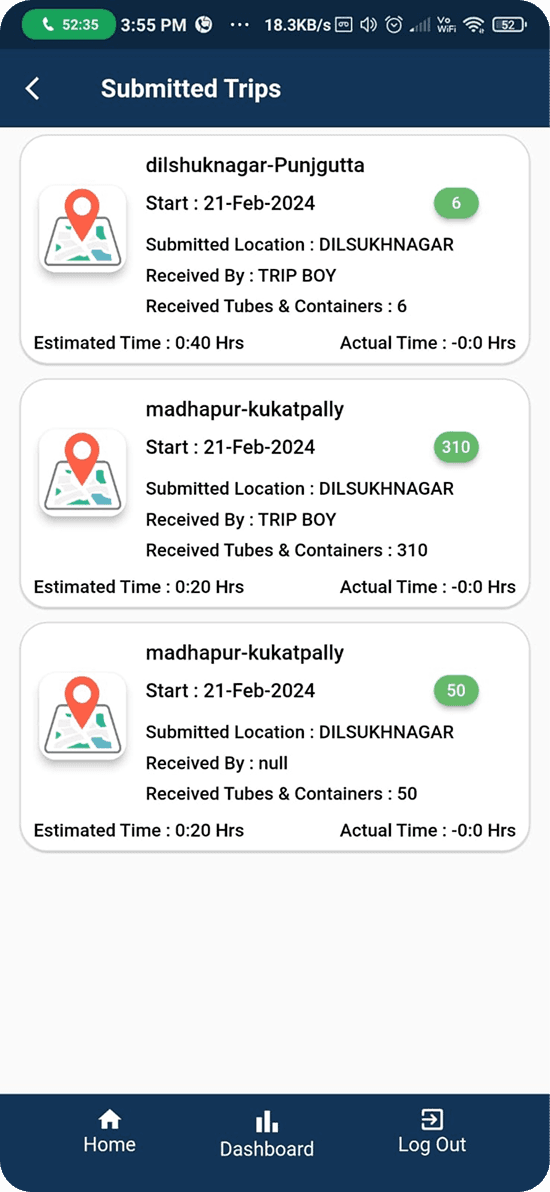
Completed Trips Lacked Quick Visibility
Completed Trips Lacked Quick Visibility
Completed Trips Lacked Quick Visibility
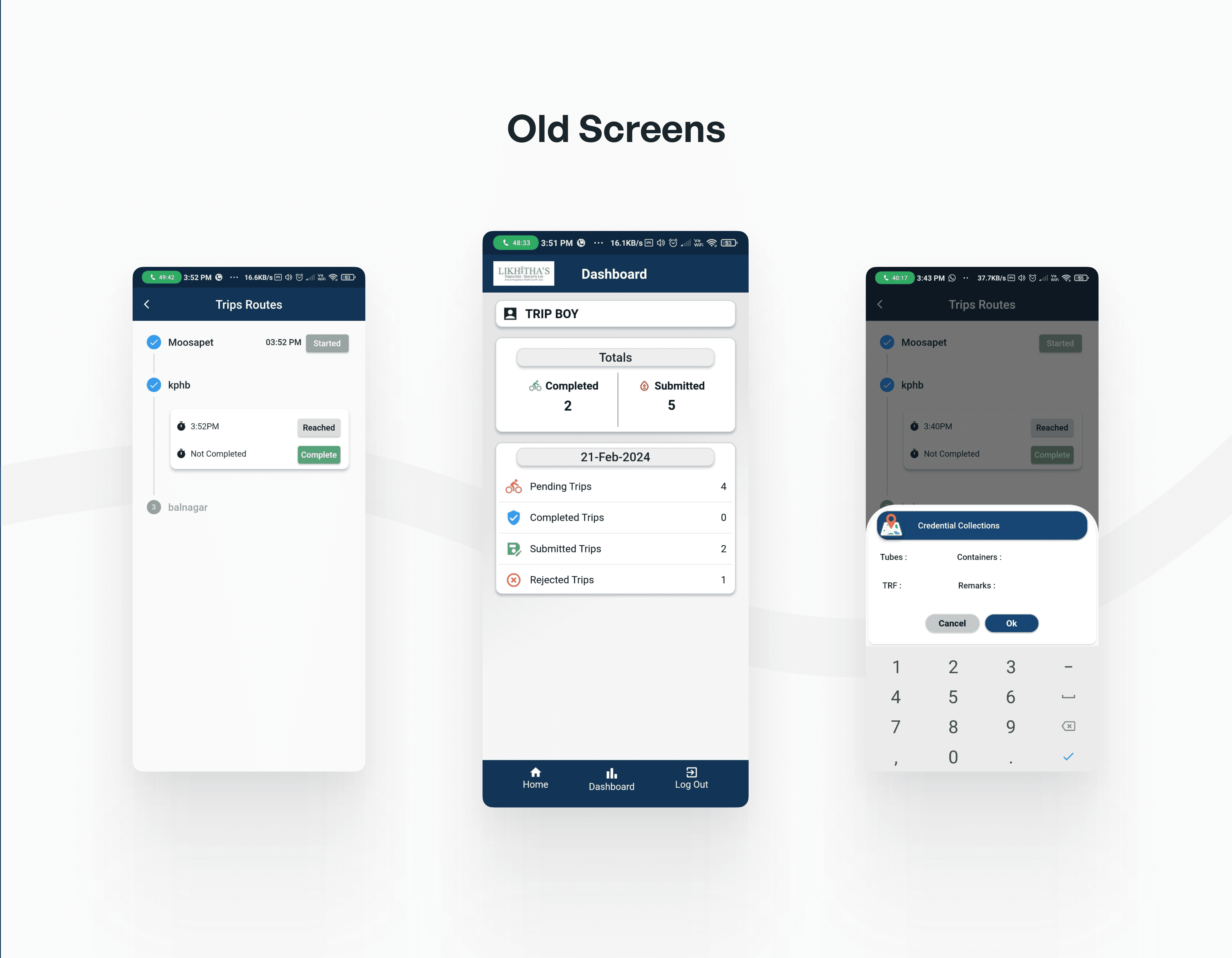
The completed trips screen showed too many details together, making it hard for users to quickly understand trip outcomes, delivery status, and completion summaries without carefully reading every individual entry.
Important information such as receiver confirmation, tube counts, and actual trip duration required extra effort to scan, slowing verification, increasing confusion, and making daily trip review inefficient for logistics teams.
The completed trips screen showed too many details together, making it hard for users to quickly understand trip outcomes, delivery status, and completion summaries without carefully reading every individual entry.
Important information such as receiver confirmation, tube counts, and actual trip duration required extra effort to scan, slowing verification, increasing confusion, and making daily trip review inefficient for logistics teams.
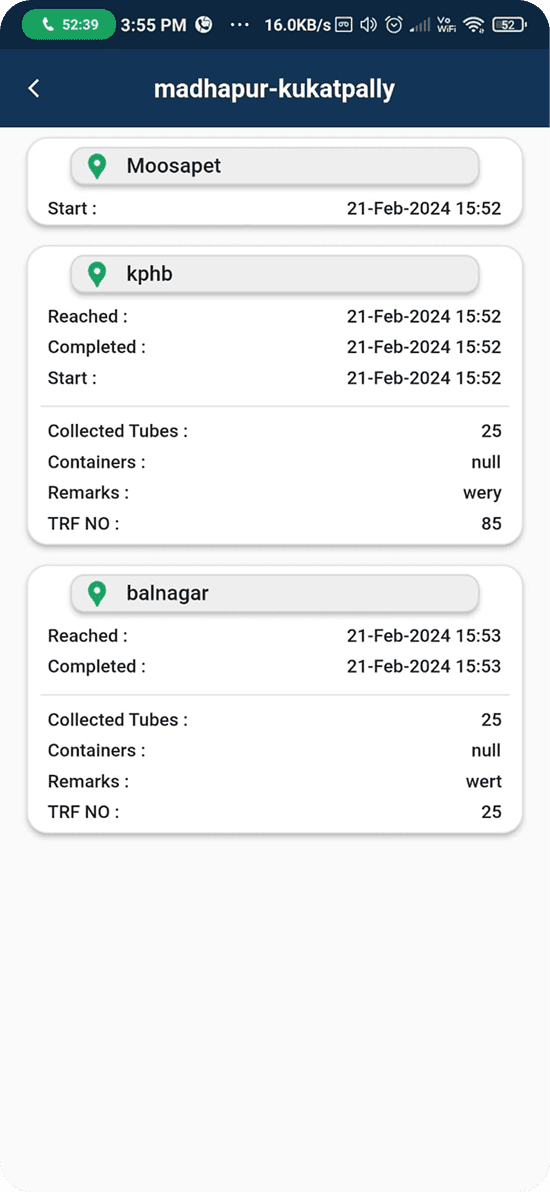
Fragmented Trip Details and Poor Readability
Fragmented Trip Details and Poor Readability
Fragmented Trip Details and Poor Readability
The trip detail screen displayed all locations in long, repetitive sections, making it hard for users to quickly understand pickup order, completion status, or progress across multiple collection points during a single trip.
Critical information like timestamps, collected counts, remarks, and TRF numbers were scattered across text blocks, forcing users to read line by line and increasing cognitive load during verification and trip review.
The trip detail screen displayed all locations in long, repetitive sections, making it hard for users to quickly understand pickup order, completion status, or progress across multiple collection points during a single trip.
Critical information like timestamps, collected counts, remarks, and TRF numbers were scattered across text blocks, forcing users to read line by line and increasing cognitive load during verification and trip review.
Key Solutions
Key Solutions
Key Solutions
Completed Trips with Route-Level Clarity
Completed Trips with Route-Level Clarity
Completed Trips with Route-Level Clarity
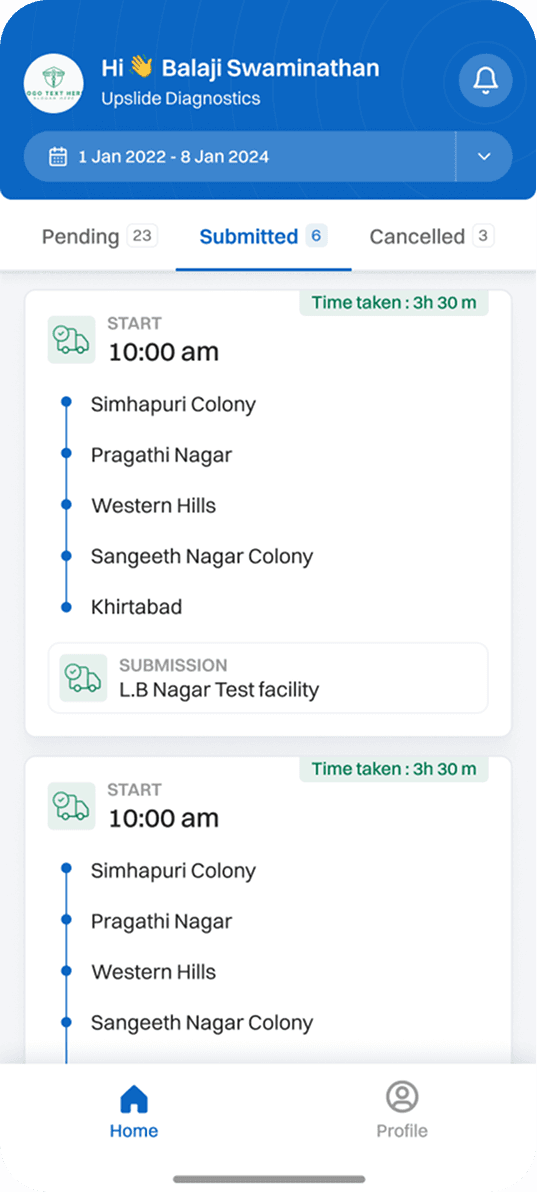
We redesigned the completed trips view to show each pickup location in sequence, highlighting where samples were collected and clearly indicating the final delivery point using route-based visuals.
Each card now uses intuitive icons, timestamps, and structured layouts to reduce scanning effort, helping users quickly verify trip completion, delivery accuracy, and overall execution without confusion.
We redesigned the completed trips view to show each pickup location in sequence, highlighting where samples were collected and clearly indicating the final delivery point using route-based visuals.
Each card now uses intuitive icons, timestamps, and structured layouts to reduce scanning effort, helping users quickly verify trip completion, delivery accuracy, and overall execution without confusion.
Structured Trip Overview for Faster Verification
Structured Trip Overview for Faster Verification
Structured Trip Overview for Faster Verification
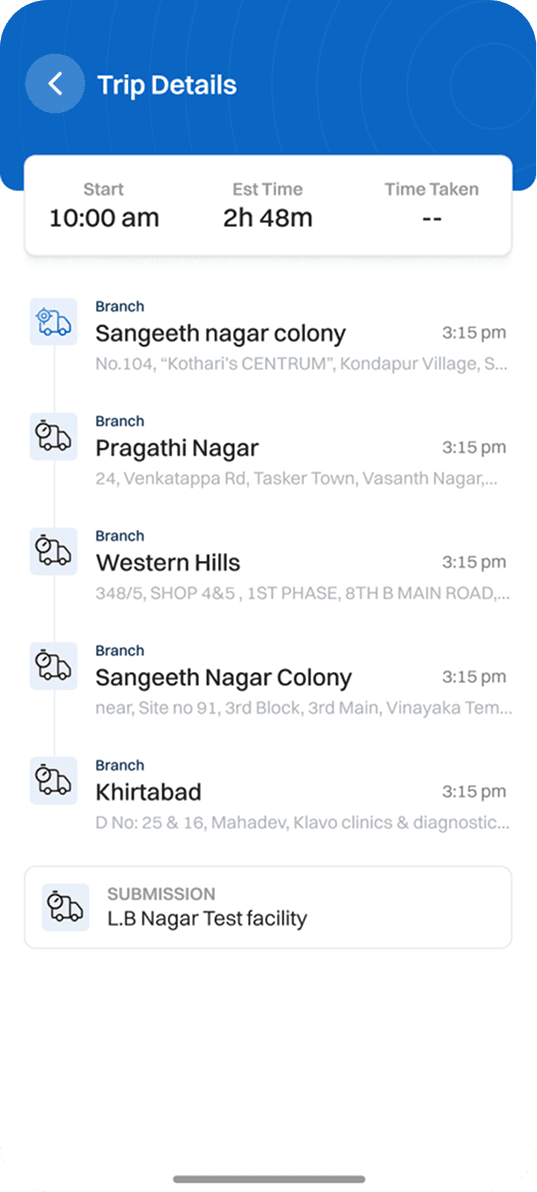
We reorganized trip details into a structured timeline, showing start time, estimated duration, and each pickup location in order, helping users instantly understand route flow and trip progress clearly quickly.
Clear icons, branch labels, timestamps, and a distinct submission endpoint replaced scattered fields, reducing reading effort, preventing missed stops, and enabling faster verification of completed trips without manual cross-checking errors.
We reorganized trip details into a structured timeline, showing start time, estimated duration, and each pickup location in order, helping users instantly understand route flow and trip progress clearly quickly.
Clear icons, branch labels, timestamps, and a distinct submission endpoint replaced scattered fields, reducing reading effort, preventing missed stops, and enabling faster verification of completed trips without manual cross-checking errors.
Fixing Key Interface Elements for Faster, Smarter Use
Fixing Key Interface Elements for Faster, Smarter Use
Fixing Key Interface Elements for Faster, Smarter Use
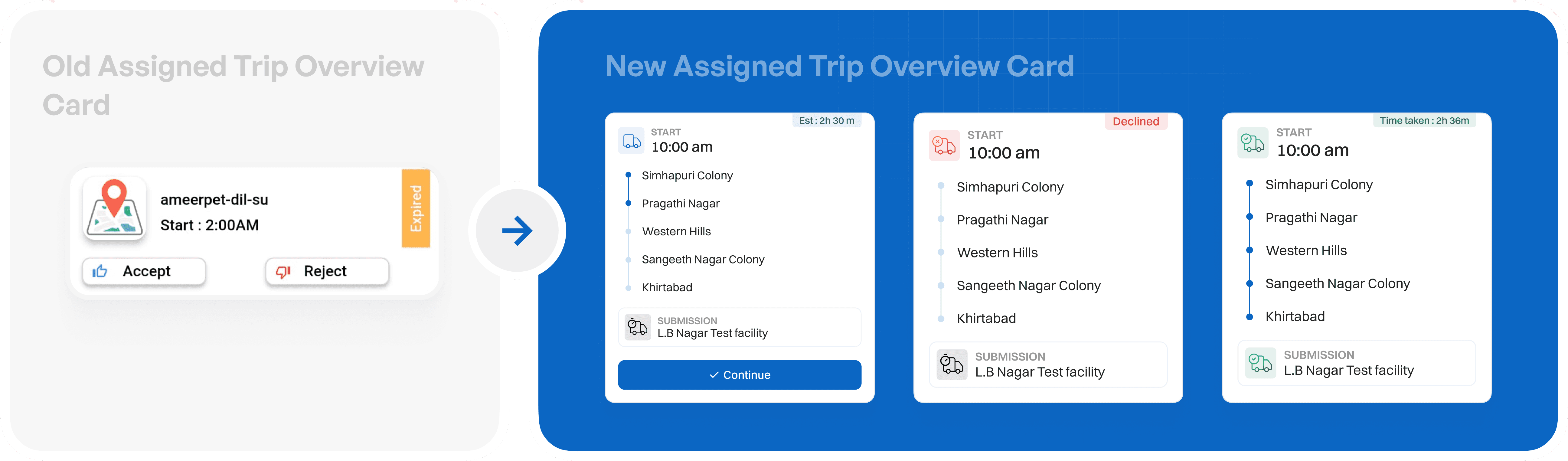
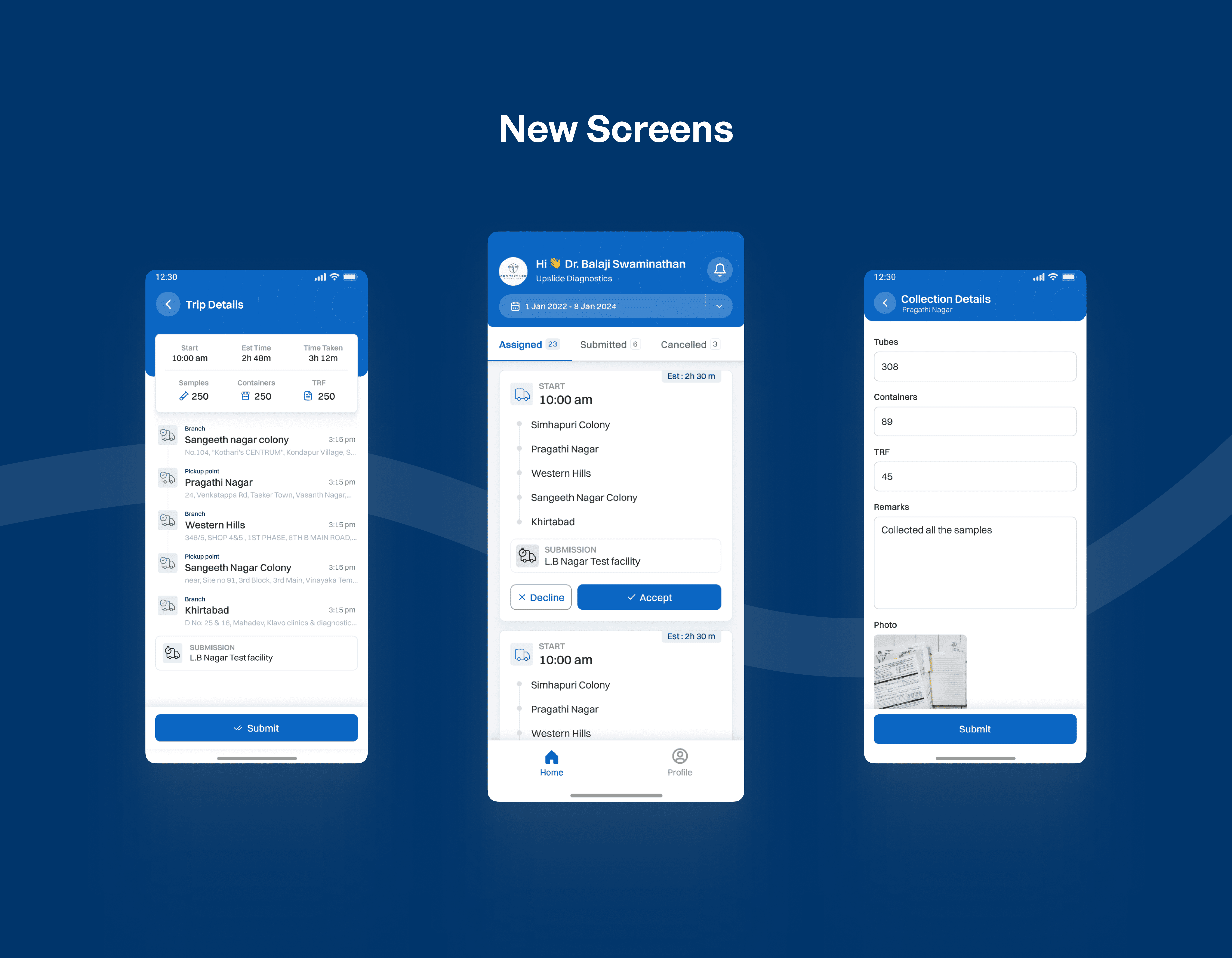
The card evolved from a simple, action-heavy listing into a structured, state-driven view with color-coded statuses, clear routes, timestamps, and guided actions—reducing confusion and improving trip execution efficiency.
The card evolved from a simple, action-heavy listing into a structured, state-driven view with color-coded statuses, clear routes, timestamps, and guided actions—reducing confusion and improving trip execution efficiency.
Business Impact
Business Impact
Business Impact

Less Training Time
Less Training Time
Less Training Time
Standardized pickup flows and consistent screens helped field teams learn faster, reducing onboarding time and repeat training effort.
Standardized pickup flows and consistent screens helped field teams learn faster, reducing onboarding time and repeat training effort.
Standardized pickup flows and consistent screens helped field teams learn faster, reducing onboarding time and repeat training effort.

Faster Task Completion
Faster Task Completion
Faster Task Completion
Clear trip sequencing, status updates, and route visibility enabled faster pickups, accurate counts, timely submissions, and trip completion.
Clear trip sequencing, status updates, and route visibility enabled faster pickups, accurate counts, timely submissions, and trip completion.
Clear trip sequencing, status updates, and route visibility enabled faster pickups, accurate counts, timely submissions, and trip completion.

Fewer Support Tickets
Fewer Support Tickets
Fewer Support Tickets
Better visibility of pickups, timestamps, and proof reduced follow-ups, errors, and dependency on supervisors during daily logistics operations.
Better visibility of pickups, timestamps, and proof reduced follow-ups, errors, and dependency on supervisors during daily logistics operations.
Better visibility of pickups, timestamps, and proof reduced follow-ups, errors, and dependency on supervisors during daily logistics operations.




Make your product the one users recommend!
Make your product the one users recommend!
Make your product the one users recommend!