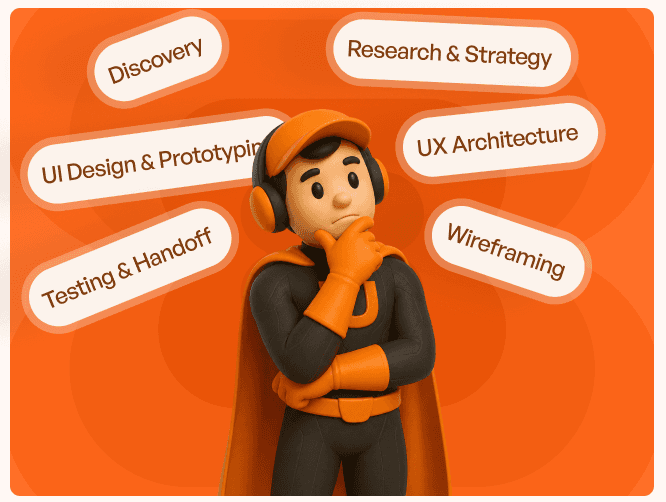
Why Designers Should Read UI/UX Books
Many designers learn through practice, but reading helps create structure.
Design books expose you to:
UX frameworks and usability principles
Product thinking approaches
Real-world design processes
Interface patterns and systems
User behavior psychology
Research methodologies
Books help designers understand why certain solutions work, not just what looks good.
The strongest product designers combine practical execution with theoretical knowledge.
The Ultimate UI Design Roadmap Book - By Michael Filipiuk
For designers unsure where to begin, The Ultimate UI Design Roadmap acts as a structured learning guide.
Instead of randomly consuming tutorials, the book organizes essential topics needed to grow in UI design. It focuses on building foundations and understanding progression.
Topics often include:
UI basics
Layout principles
Typography
Visual hierarchy
Design systems
Workflow improvement
This type of resource is useful for:
Beginner UI designers
Students learning product design
Career switchers entering UX/UI
Learning becomes easier when knowledge follows a roadmap.
What The F*ck Is UX Design? Beginner-Friendly UX Thinking
One of the biggest challenges new designers face is understanding what UX actually means.
Many confuse UX with visuals.
In reality, UX involves:
User behavior
Problem solving
Navigation
Research
Interaction design
Information architecture
Books like What The F*ck Is UX Design simplify complex concepts into practical explanations.
For beginners, this helps remove confusion around UX terminology and builds stronger foundations.
Understanding UX early prevents focusing only on aesthetics.
Because attractive interfaces without usability rarely succeed.
The Ultimate UI Design Resources List Book - Curated Learning Materials
Design growth often depends on accessing good resources.
The problem:
Too many resources create overwhelm.
Curated resource collections help designers save time by organizing useful tools, references, communities, and learning platforms.
Books focused on design resources may include:
Inspiration platforms
Icon libraries
Design systems
Mockup resources
Accessibility tools
UI kits
Research repositories
Efficient learning matters.
The Basics of User Experience Design - Understanding Human-Centered Design
One of the most respected foundational topics in digital product creation is user experience design.
The Basics of User Experience Design introduces principles such as:
User-centered design
Research methods
Personas
Accessibility
Interaction patterns
Usability testing
These concepts matter because products fail when they prioritize features over users.
Good UX reduces friction.
Reduced friction improves adoption.
Strong user experience design directly impacts customer satisfaction and business performance.
This makes UX knowledge valuable across industries including:
Healthcare applications
Enterprise platforms
E-commerce systems
SaaS products
Mobile apps
Reading Design Books Improves More Than Visual Skills
Design maturity comes from learning how users think.
Books strengthen abilities beyond interface creation:
Product Thinking
Understanding business goals alongside user needs.
Problem Solving
Designers become better at identifying root causes instead of treating symptoms.
Communication
Clear reasoning improves stakeholder discussions and design presentations.
Systems Thinking
Products work as connected ecosystems, not isolated screens.
Final Thoughts: Great Designers Stay Curious
Reading design books won’t instantly make someone an expert.
But consistent learning changes how problems are viewed.
Over time, designers stop asking:
"How do I make this screen look better?"
And start asking:
"How do I make this easier, clearer, and more useful?"
That shift creates stronger products.
Whether you’re just entering UI/UX or refining years of experience, investing time in free UI design eBooks and UX resources can sharpen thinking and improve outcomes.
Because better design starts with better understanding.