As businesses increasingly recognize the critical impact of user experience (UX) on product adoption and customer retention, the demand for professional UI/UX design services has surged. A common question arises during the vendor evaluation process: "How much do agencies charge for UI/UX design?" This question, however, doesn't have a straightforward answer. Pricing can vary significantly due to differences in project complexity, research needs, and business objectives.
Why UI/UX Agency Pricing Varies So Much
The pricing of UI/UX agency services is subject to a myriad of factors. One primary consideration is the project scope, which dictates the breadth and depth of work required. For instance, designing a simple marketing website is vastly different from working on an enterprise SaaS platform. The latter involves more complex workflows, multiple user roles, and often requires integrations with existing systems.
Product maturity also plays a role in pricing. A mature product might need a UX refresh to enhance usability and modernize the interface, whereas a new product may require foundational UX research and strategy development. The number of user roles and the complexity of workflows further influence the cost. For example, a CRM platform with diverse user personas and intricate workflows demands more effort than a straightforward informational site.
It's crucial for businesses to articulate their needs clearly to get a realistic estimate from a UI/UX agency.
How Much Do Agencies Charge for UI/UX Design? Common Pricing Models
Agencies employ various pricing models to accommodate different project needs. Fixed project pricing is ideal for projects with clearly defined scopes. This model offers predictability and is typically used for short-term projects with specific deliverables.
Retainer pricing, on the other hand, suits ongoing product evolution. It provides flexibility and continuous engagement, allowing agencies to iterate and optimize as the product grows. This model is particularly beneficial for SaaS products that require continuous updates and improvements.
Hourly consulting is another approach, often used for UX audits or advisory work. This model allows businesses to engage experts for specific tasks or guidance without committing to a long-term contract. It's important to note that no pricing model is universally superior; the choice depends on the project's unique requirements.
Typical Cost Ranges for Different Types of Projects
While it's challenging to pin down exact costs, it's possible to discuss cost ranges based on project types. A UX audit, for example, might range from a few thousand dollars to tens of thousands, depending on the depth of analysis required. A website redesign could vary widely, from $10,000 to $100,000, based on the site's complexity and the number of pages.
Redesigning a SaaS Softwarecould cost between $20,000 and $80,000, influenced by the intricacy of features and user interactions. The design of a new SaaS product might start at $50,000 and climb significantly higher, depending on the scope and research involved. Enterprise product modernization is often the most expensive, potentially exceeding $100,000, given the scale and complexity of such projects.
Complexity is a significant factor impacting cost; as the intricacy of user interactions and workflows increases, so does the effort required, leading to higher expenses.
What Is Usually Included in Agency Pricing?
Understanding what is included in agency pricing is crucial for evaluating value. Typically, agencies offer a comprehensive suite of services, starting with user research to gather essential insights. Competitor analysis is often conducted to benchmark against industry standards.
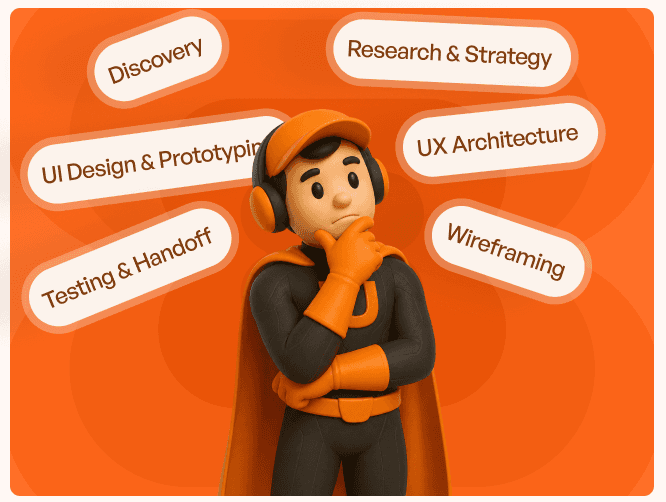
Information architecture and user flows are critical components, ensuring that the product's navigation and structure align with user needs. Wireframing and UI design follow, focusing on creating an intuitive and aesthetically pleasing interface. Prototyping and usability testing are integral to validating design concepts and ensuring functionality.
Design systems are developed to maintain consistency across the product, which is particularly important for scalable SaaS platforms. Many businesses make the mistake of comparing prices without assessing the deliverables included, leading to misunderstandings about value.
What Drives Agency Costs Higher?
UI/UX agencies estimate projects based on the total design effort rather than just the type of product. The biggest cost drivers include:
Number of screens to be designed
Number and complexity of user flows
Custom dashboards and modules
Interactive states and micro-interactions
Responsive designs (desktop, tablet, mobile)
Design system creation
Prototyping and usability testing
Developer handoff and implementation support
In the context of SaaS products, particularly CRM platforms, analytics tools, and workflow management software, complexity can lead to exponential effort increases. This complexity is not simply additive; it requires a deeper level of insight and problem-solving.
Rather than applying a one-size-fits-all approach, Upslide Design Studio evaluates factors such as user journeys, information architecture, feature adoption, and product scalability. This allows organizations to prioritize design efforts where they can create the greatest impact on usability and business performance.
Agency vs Freelancer: Understanding the Cost Difference
When considering UI/UX design services, businesses often weigh the choice between hiring an agency or a freelancer. Freelancers typically offer lower costs and greater flexibility, making them an attractive option for smaller projects or startups with limited budgets.
However, freelancers may have limitations in terms of specialization and scalability. Agencies, conversely, provide multidisciplinary expertise, encompassing research capability and scalability. They are equipped to handle larger, more complex projects with a depth of process and resources.
It's important to understand that higher pricing with agencies often reflects this broader expertise and comprehensive service offerings, which can be crucial for achieving strategic business goals.
Why the Cheapest Option Can Be More Expensive
Choosing the cheapest option in UI/UX design can result in unforeseen costs. Common risks include lack of thorough research, poor usability, inconsistent design, and the eventual need for redesigns, leading to UX debt.
Poor user experience can create hidden operational costs through workflow inefficiency, adoption barriers, and cognitive overload for users. This often results in increased support tickets and lower retention rates, ultimately affecting the bottom line.
Investing in quality UI/UX design upfront can mitigate these risks, leading to smoother user interactions and better business outcomes.
How to Evaluate ROI When Hiring a UI/UX Agency
Evaluating the return on investment (ROI) for UI/UX design services involves looking beyond aesthetics to business outcomes. Metrics such as user adoption, onboarding completion, conversion rates, and support ticket reduction are crucial indicators of success.
Retention and productivity gains also reflect the effectiveness of a well-designed user experience. A successful UI/UX project improves not just the visual appeal but also enhances operational efficiency and user satisfaction.
Ultimately, the success of UI/UX should be measured by these business outcomes, highlighting the strategic value of investing in professional design services.
How to Choose the Right UI/UX Agency
Selecting the right UI/UX agency requires careful evaluation of several factors. It's important to assess their expertise in SaaS design and review their portfolio quality to gauge their experience and capabilities.
The agency's research process and testing methodology should align with your project needs, ensuring that they can deliver insights and solutions tailored to your business. Strategic thinking and workflow optimization experience are also crucial for achieving desired outcomes.
The best agencies focus on solving usability and business problems, not just redesigning screens. They act as strategic partners, helping businesses achieve long-term success through improved user experiences.
Conclusion
Agency pricing for UI/UX design depends on various factors, including complexity, research depth, project scope, and business goals. When asking, "How much do agencies charge for UI/UX design?" the more pertinent question is, "What business outcomes will that investment help achieve?"
Businesses should focus on defining usability challenges, assessing workflow complexity, and clarifying project goals to evaluate agencies based on expertise and strategic value rather than cost alone.